


Once the best friend of the Chiribaya people in pre-Inca times, the Chiribaya shepherd dog will now forever occupy a place of honor in Peruvian history. This native breed, which stood with this ancient civilization through life and death between 900 A.D. and 1350 A.D., has just been officially recognized as part of Peru’s national cultural heritage.
With this gesture, the state seeks to honor the legacy of the Chiribaya culture and protect a native dog breed that, against all odds, still roams Andean highlands and jungle communities.
“The dog exists, and we must protect its presence. It is our heritage and our history,” says archaeologist Sonia Guillén, who in 2006 discovered 43 mummified Chiribaya dogs buried alongside their owners in the desert region of Ilo, Moquegua. Guillén, who today shares her home with a Chiribaya shepherd “of cheerful temperament and good character,” has been one of the leading advocates for the breed’s recognition.
Read More: Early Farming Societies Forged Bonds with Ancient Dogs in the Americas
Recognition for the Chiribaya Shepherd
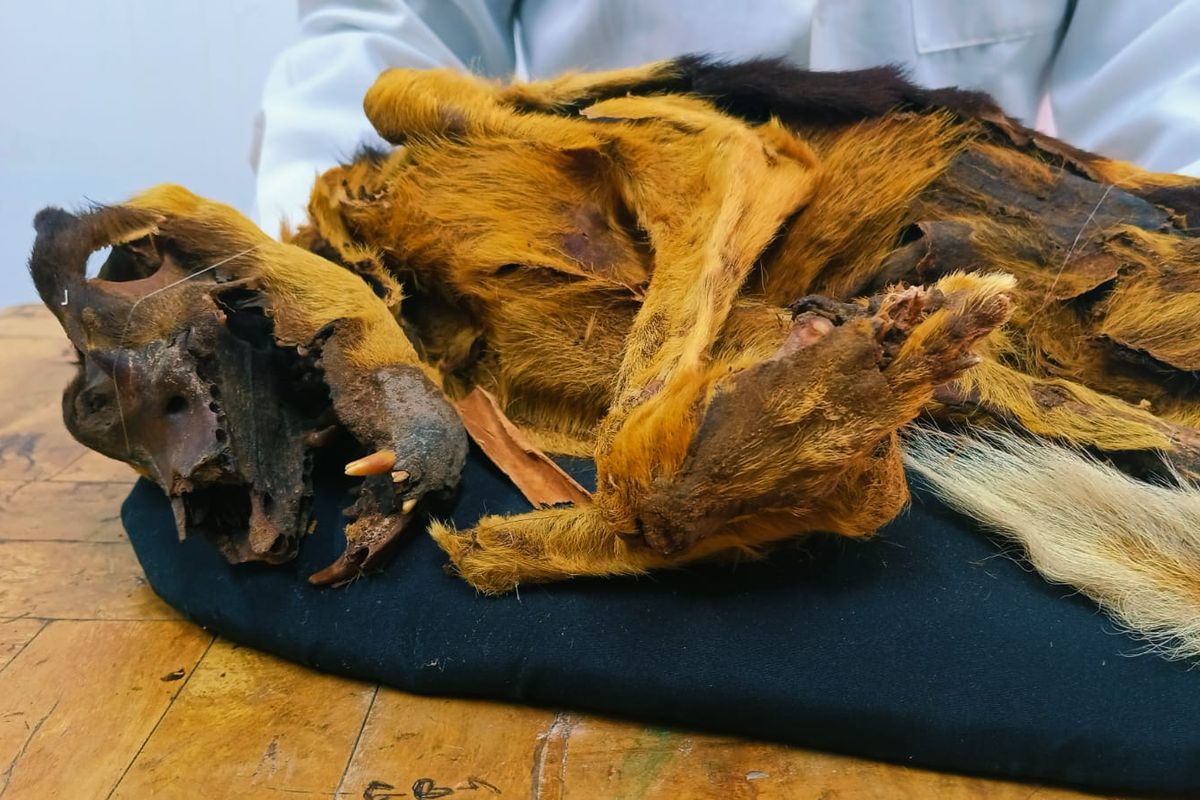
One of the mummified Chiribaya Shepherds
(Image Courtesy of Ángela Gutiérrez, Director of the El Algarrobal Museum)
For decades, the Chiribaya shepherd was unfairly dismissed as a “chusco,” a derogatory term for mixed-breed dogs. Yet findings in Ilo tell another story: these animals were not sacrificed as offerings, but lovingly buried among their people. Some were laid on beds of fish, while others had corn or tubers placed in their mouths, and some were wrapped in blankets.
Cynologist Jaime Rodríguez, president of the Peruvian Kennel Club, explains: “It was to keep them warm on their journey to a new life.” For him, these burials speak of affection and respect.
Scholars of the breed agree that it was a working dog, dedicated to herding llamas and alpacas — animals essential to the survival of the Chiribaya people.
“It’s the forgotten hero of Andean livestock development,” says Guillén.
For Ángela Gutiérrez, director of the El Algarrobal Museum — where two of these mummies are preserved — the dog’s role went even further: “It was a faithful companion of the Chiribaya people.”
The Chiribaya Shepherd as a Living Image
The bodies at the Ilo site, including those of dogs, humans, and parrots, are perfectly preserved due to the dry environment. Here, organic matter dehydrates before it can decompose.
“The salts of the Atacama Desert preserve remains extraordinarily well; they preserve them just like in Egypt. That’s why we were able to identify the dog,” explains Guillén. Simply by looking at it, they could tell it was a breed distinct from those previously known. “It was far from what we understood as a Peruvian Hairless Dog,” says Guillén, referring to the only breed officially recognized as native to the country, popular during Inca times.
But the astonishing discovery doesn’t end there. Guillén immediately confirmed it when she recognized, in some dogs she saw on the streets, the “living image” of those mummies. She thus verified that their descendants still exist, maintaining genetic continuity and similar behaviors.
The Atacama Desert Paradox
Identifying the dogs included examining skeletal remains, comparing them with modern specimens, and defining breed parameters. Some genetic studies continue to this day, led by Greger Larson, a prominent zoologist and evolutionary geneticist at the University of Oxford. So far, attempts to analyze their DNA have faced a paradox of the Atacama Desert — the dry climate that mummifies fur and tissues also destroys genetic material.
“We’ve only been able to work with low-coverage mitochondrial DNA, which greatly limits what we can interpret,” explained Alice Dobinson, one of the project’s researchers.
Even so, the results show that Chiribaya dogs are closely related to other pre-Columbian dogs from South America, with no evidence of crossbreeding with post-conquest European dogs. Scientists hope to one day sequence modern Chiribaya dogs to determine whether they retain direct genetic links to those ancient desert guardians.
Guillén, however, insists that the Chiribaya “is everywhere.” It has been spotted in Cusco, Puno, Lima, and northern Chile, as well as in more distant places like Ecuador and Salta, Argentina — regions once inhabited by llamas. And its reach seems to extend even further: Guillén’s own dog was adopted in the Peruvian jungle.
In Ilo, they still accompany local farmers with the same protective instinct they had a thousand years ago. “They are active, playful… they’re mischievous,” says Gutiérrez. “This dog has not yet lost its essence: that caring nature, always watching over its owner or their animals. There are no more llamas, but now they guard the chickens. The instinct remains.”
The Chiribaya Shepherd Today
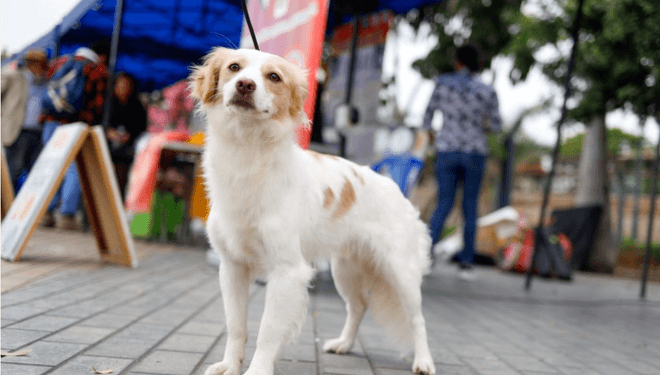
Modern-day Chiribaya Shepherd
(Image Courtesy of Ángela Gutiérrez, Director of the El Algarrobal Museum)
“For me, it was like a child entering Walt Disney World,” recalls Rodríguez about the day he saw the first mummies of what are now known as Chiribaya shepherd dogs.
As a cynology specialist, he confirmed that the mummies displayed a very distinct phenotypic and morphological relationship, suggesting they likely belonged to a pre-Hispanic breed with unique, consistent features across multiple individuals.
The surprising part came later: those same characteristics remain alive in modern dogs, including the four Chiribaya shepherds Rodríguez keeps at home.
“This dog has roamed freely for centuries, interbreeding naturally, yet its phenotype has been astonishingly well preserved,” he explains.
Rodríguez describes its anatomy like someone reading a living history book: hare-like feet that propel it over difficult terrain; high hocks and a feathered tail that balance every leap; a body longer than it is tall, making it an efficient trotter. Its abundant coat, semi-drooping ears, strong muzzle, and lupoid-shaped head convey strength, endurance, and elegance. The coat colors — ranging from ivory to red and from brown to black — blend harmoniously with its eyes, reflecting centuries of adaptation and survival.
Now that the breed has been declared part of the nation’s cultural heritage, the Peruvian Kennel Association has launched a “recovery, breeding, and selection” program. This program identifies dogs that retain the phenotypic traits of the ancient Chiribaya shepherd to ensure the continuity of its lineage, while sterilizing those that do not.
“The goal is to fix the characteristics we saw in the mummies,” Rodríguez notes.
In parallel, an experimental breeding center is being developed in Ilo, in the same valley where the Chiribaya shepherd dog mummies were found. There, archaeological research is combined with the controlled breeding of modern specimens to preserve this ancient genetic legacy.
Read More: Scientists Study the Secrets of 2,500-Year-Old Mummified Animals
Article Sources
Our writers at Discovermagazine.com use peer-reviewed studies and high-quality sources for our articles, and our editors review for scientific accuracy and editorial standards. Review the sources used below for this article:
