


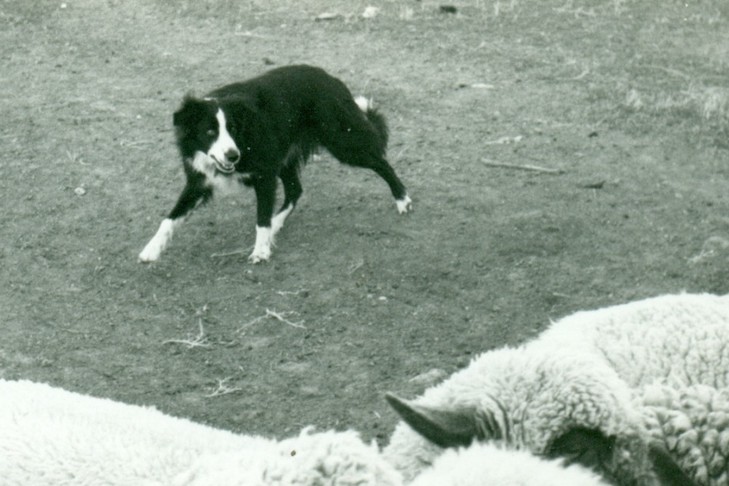
In medieval times, shepherds’ dogs were exempt from dog taxes and were so marked by their docked tails. Even then there was some specialization between the dogs: Some were drovers, some served as guards; others were used as herders. Dr. Cohrs, in “Treatise of Englishe Dogges” written in 1557, describes the shepherd’s dog and its work. Other early writings on rural life also mention the farm dog and its duties.
What’s in a Name?
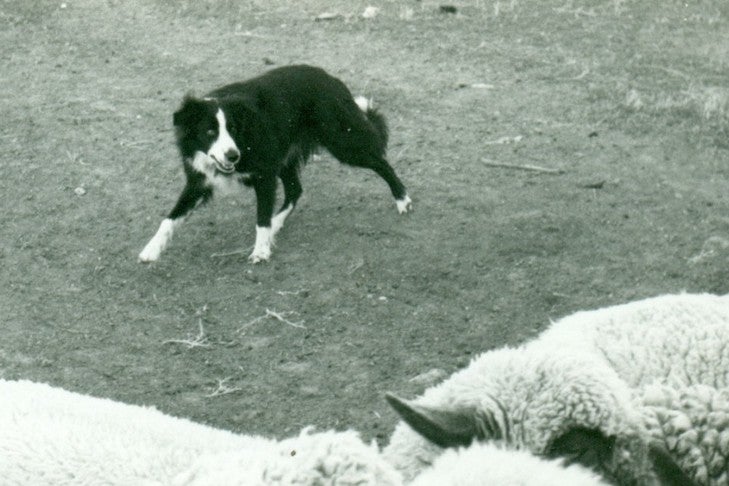
In the border country between Scotland and England, the working collie established itself as the most valuable asset a flock owner could have. Without the tireless work of such a dog, the vast flocks of sheep could not have been managed. Iris Combe, in her book, “Border Collies,” says that in old Gaelic “collie” was the rural term for anything useful — a “collie dog” was a useful dog. Because this breed flourished in the border region, it was christened the “Border Collie.”
It has been written that, in addition to carefully planned breedings, many indiscriminate matings took place between the working collies, or farmers’ dogs, and dogs that ran loose in the countryside. Some of the planned breedings were between the gamekeepers’ gundogs and the collies, and it has been debated whether the gundog-collie cross was more dominated by the collie contribution or by the genes from the gundogs.
Where There’s Sheep, There’s a Sheepdog
The Border Collie’s heritage is closely tied to the earliest development of livestock farming and the wool trade throughout the United Kingdom and its far-flung outposts. The variations in type in Border Collies today are a direct result of the diverse demands of this widely spread wool trade.
The constant exposure to a harsh climate set one requirement for the Border Collie, the ruggedness of the terrain another. Smaller, swifter dogs were found to be more suited to the precarious footing of the crags and cliffs than heavier and larger dogs. The expanse of territory was another consideration. What type of dog could cover 50 miles or more each day? And the livestock being worked also dictated form and function to some extent. Sheep, goats, and cattle each required a herding dog with a certain size, speed, and temperament.
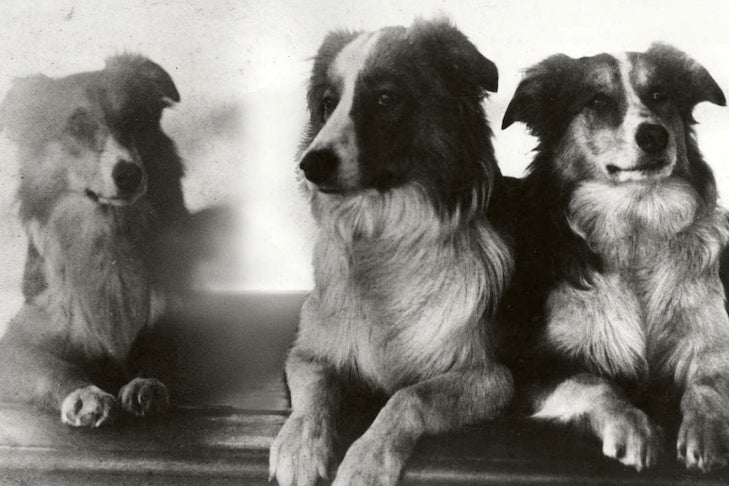
Another factor was whether or not the sheep remained out or were in the sheep fold at night. Dogs for night work were more easily seen and directed by the shepherds if their coloring made them more visible. The white markings around the neck, on the chest, legs, and tip of the tail were favored for this reason.
Pictures of the breed illustrate the wide physical differences among them. However, they all were brilliant workers and were selected for many breeding programs based on these working skills. Whatever the early background, it has given breeders of the last 130 years a diverse and extensive gene pool of both physical and behavioral characteristics. These have been combined, with the emphasis upon herding instinct, to produce the dedicated worker we know today.
Bred With a Purpose
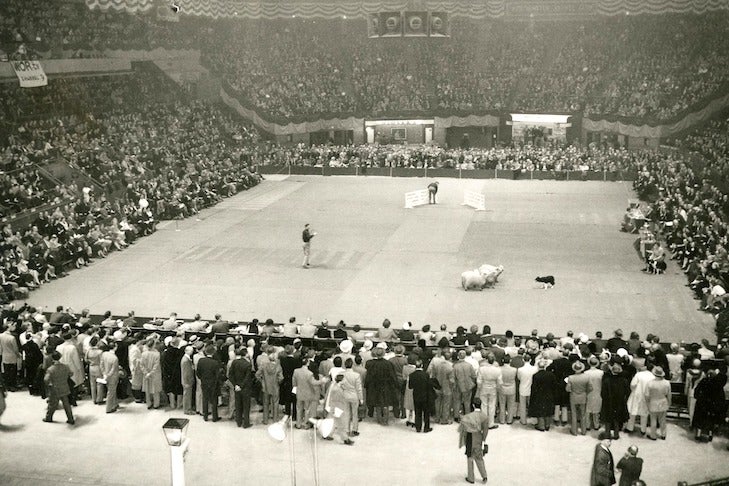
Pride and the appreciation of the dogs’ work led to informal competitions among local herders and farmers. The first formal sheepdog trial was held in 1873 in Wales. This was on the grounds of a large estate where successful gundog trials had been held for several years. Other sheepdog trials followed, and in 1906 the International Sheepdog Society was formed. One of its objectives was to establish a studbook, which it did. It also held its own first official sheepdog trial in 1922. These various trials helped outstanding dogs get recognition, subsequently having a greater influence on the breed.
Border Collies have since dominated competitive sheepdog trials (like in the movie Babe) and consistently place highest in the fast-paced sport of agility and are routinely on lists of the world’s smartest dog breeds.
Border Collies were exported from ports of Great Britain to sheep farms and ranches all over the world. Dogs came to the United States for this purpose, where they were then discovered by obedience exhibitors, who were fascinated by this super-intelligent dog that never seemed to tire of learning and working.
There have been a number of organizations formed in this country to advance and register this breed. In May of 1940, the North American Sheepdog Society was formed to promote and protect the breed and to hold sheepdog triok under its own rules. The American Internotiomd Border Collie Registry, formerly in Runnels, Iowa, is an old registry for the breed. The Border Collie Society of America formed as an organization working hard to preserve the herding instinct in the breed and to educate judges about the breed by forming breed study groups and other activities, including conformation matches. Clearly, the Border Collie had many dedicated supporters.
The Border Collie was recognized by the AKC for inclusion in the Miscellaneous class in 1955. The breed was fully recognized in 1995.
