


LINDA HOLMES, HOST:
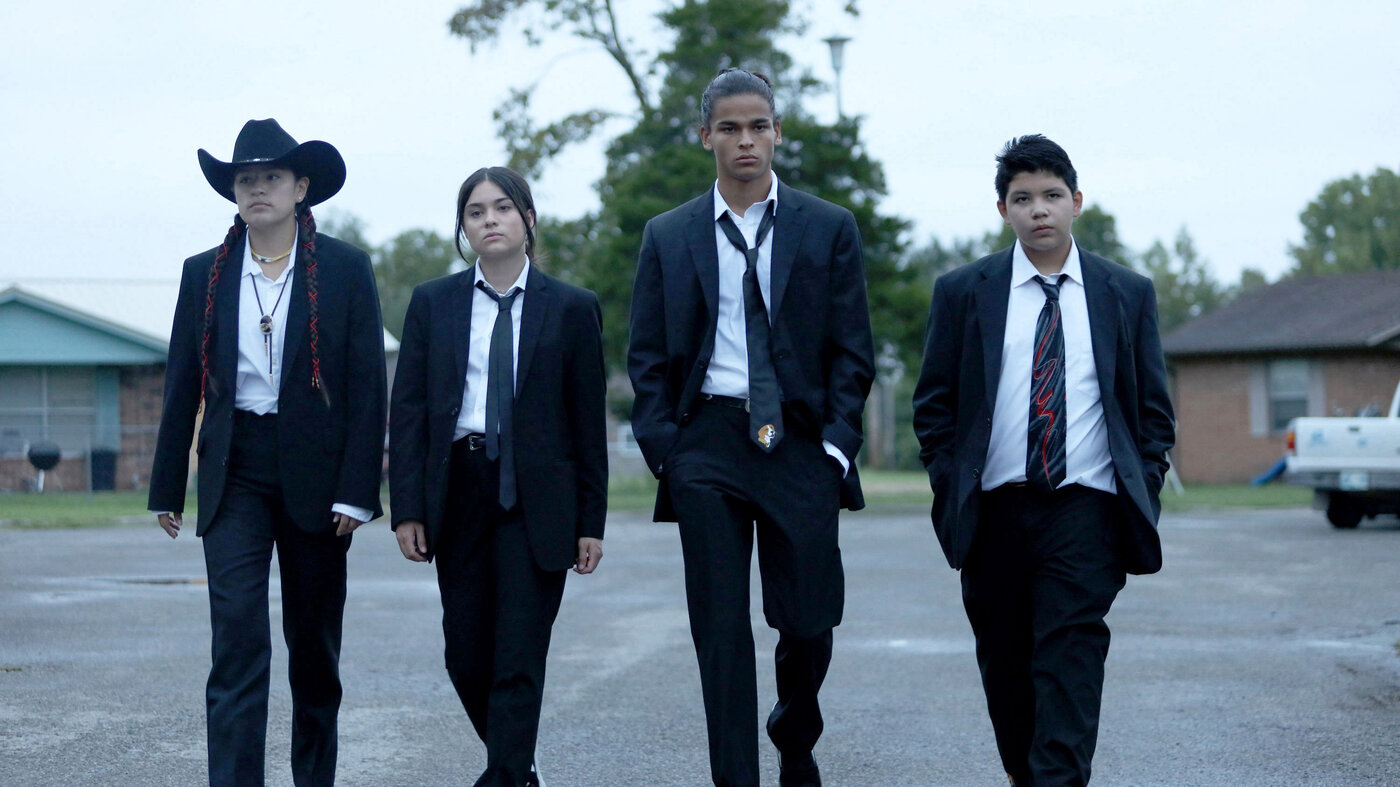
The new series “Reservation Dogs” follows four Indigenous teenagers who live in Oklahoma but are scheming and saving to get to California. It’s a loose and dry-witted comedy that has notes of countless teenager hangout stories, and it’s made by an entirely Indigenous group of writers and directors and actors who bring a level of detail and specificity to these kids and their experience that American television, it’s safe to say, has practically never had. I’m Linda Holmes. And today, we’re talking about “Reservation Dogs” on POP CULTURE HAPPY HOUR from NPR, so don’t go away.
(SOUNDBITE OF MUSIC)
HOLMES: Welcome back. Joining me today is writer and film critic Shea Vassar. Welcome back, Shea.
SHEA VASSAR: Hey, Linda, thanks for having me.
HOLMES: Of course. And also here with us is Sam Yellowhorse Kesler, a producer for NPR’s Code Switch. Welcome to the show, Sam.
SAM YELLOWHORSE KESLER, BYLINE: Hi, Linda, great to be here.
HOLMES: Absolutely. I’m always delighted when we can have a new member of the NPR family here with us on the mic. So “Reservation Dogs” is the creation of filmmaker Sterlin Harjo and the currently very busy Taika Waititi. There are four teenagers who form the core of the show. D’Pharaoh Woon-A-Tai plays Bear, who’s kind of the group’s roughly defined leader-ish. Devery Jacobs plays Elora Danan, who is indeed named after the character in “Willow.” She’s the most kind of determined of the four of them to get to California. Paulina Alexis plays Willie Jack and Lane Factor plays Cheese. There’s a longer story going on about these kids and their families and their efforts to get out of Oklahoma. But each episode is also kind of its own contained story, whether it’s a day at the health clinic or a hunt for a perfect gift.
Shea, you wrote about the show at rogerebert.com. I certainly recommend that everybody go and check that piece out. What did you think of it?
VASSAR: So I am a big fan of the show. I thought from the very beginning it really captures something unique and something that hasn’t been seen on television before. And we get to finally see Indigenous teenagers just having fun, having movie nights, selling meat pies outside of the Indian Health Services Clinic. So I just really overall had a great time watching the four episodes that they allowed me to screen for the review. And I just can’t wait for more now.
HOLMES: Yeah. Sam, you had talked about this in terms of a phrase that I have often used myself, which is like, not love. Tell me about like, not love.
KESLER: Yeah. I mean, it was a good watch. And I will say that in preparation for talking about it, I went back and rewatched all of the episodes, and it did improve a little bit on the second time. And I will probably finish out the season. But just in terms of, like, TV shows that I will really start thinking about after watching them, it didn’t really stick for me. I don’t think it’ll make it into a rotation of, like, shows that I’ll watch long after this.
HOLMES: Yeah. What do you think you wanted more of from this show?
KESLER: Something I really liked with shows similar to this is just, like, taking a step aside with each of the characters and giving me, like, kind of their story, either their background or some kind of, like, motivation or kind of, like, their journey in this. And that’s something I’ve not really experienced yet, not really seen yet. It mostly focuses around Bear and his journey. But also most of the episodes are pretty plotless. There’s not a lot kind of, like, pushing people forwards episode to episode, which I can get with sometimes. But in this case, it didn’t really make me want to stick around very much longer. It’s more like, OK, this is something really fun that you can watch. But when you turn it off, you’re not really going to think like, oh, yeah, like, that episode really stuck with me for X reason or whatnot.
VASSAR: I agree. I just want to see more of Willie Jack and Cheese. Like, I want to see them in more. And so I’m really hoping that this season will continue with having maybe a Cheese-centered episode. We got a really nice moment with him as he adopted an older woman at the clinic in Episode 2 as his grandma. And I really, really loved that. But I also could have seen that as an entire episode just around Cheese. And I just think that Lane Factor, for this being his first role, is so good in it. So I hope to see a lot more of him.
HOLMES: Yeah, I agree. When I went to sort of get into, like, a capsule description of these characters and it was like, yes, you know, Bear is sort of the official leader of the group, or they treat him like the official leader, you know, Elora Danan is more than the actual leader, I think, but when you get into Willie Jack and Cheese, what was so interesting was I was so drawn in by both of these performances. I enjoyed these performances so much. But when I actually tried to kind of get into, like, a quick description of who those kids are, it didn’t come as quickly as it did with the other ones. And I think that’s partly what Sam is talking about, that you don’t get, like, that much to hang your hat on yet. And what it reminded me of – this is, like, the highest compliment in the world coming from me, but one of the things it really reminded me of was the film “Breaking Away,” which is about these four, like, you know, they’re getting out of high school, these four young guys. And they live in Bloomington, Ind., and they are kind of working-class, towny kids in the sort of the shadow of all the people who are working in and attending Indiana University. And it has this same sense of, like, really kind of loose, rambly (ph), kids in this environment that they both are really super proud of and super attached to, and yet also kind of bristling against. But I both really enjoy spending time with these kids, and I kind of want a little bit more plot. I want there to be a little bit more of a pulling together of these threads. I did want to ask you, too, Shea – you talked in your piece about the title, “Reservation Dogs.” And I encourage everybody to go to Shea’s piece and get kind of the full rundown on this. But for people who kind of aren’t familiar with, like, is this a reservation that they live on? What is the origin of this? Can you give, like, the condensed version of what the relationship is between that title and where these kids are living?
VASSAR: Definitely. Oklahoma experience when you’re a Native person, especially in that northeastern part of the state, you literally go from one nation to the next nation, to the next one. And for so long, it was assumed that the so-called reservations were disestablish. And this happens for many reasons. The first one is going to be the Allotment Act – which, yeah, I’m also a legal student. I’m getting my master of legal studies.
HOLMES: (Laughter).
VASSAR: So if this starts sounding really nerdy, now you know why. After these tribes were pushed to this northeastern area in Oklahoma, the government went back in and created the Allotment Act in hopes to break up the land per family, per the different nations, which, specifically, I’m mentioning the five tribes, which are going to be the Muskogee, Cherokee, Choctaw, Chickasaw and Seminole. And so what they did was they issued a certain amount of acreage to each citizen of these tribes and disestablished the collective.
HOLMES: Right. Right.
VASSAR: When the state comes in and brings together Indian territory on the eastern side and Oklahoma territory on the West to create the 46th state in 1907, it is thought that those reservations that were allotted, including the five tribes, were no longer existing. So for me, as a Cherokee Nation citizen, we heard for so long that we don’t have a reservation, but we have jurisdiction.
HOLMES: Sure.
VASSAR: And so what happened is last year, there was a Supreme Court decision, which is the McGirt v. Oklahoma. Basically, it stated that despite Allotment, despite Oklahoma becoming a state, these reservations were never disestablished. So “Reservation Dogs” is set in Okern, which is a fictional town that is shot on location in Okmulgee, Okla., which is the capital of the Muskogee Nation. So the connection there is very, very nuanced. Oklahoma is home to 39 federally recognized tribes.
HOLMES: Yeah.
VASSAR: So you have a lot of native people there.
HOLMES: One of the reasons why I wanted to talk about that a little is that it seemed like one of the many places where the use of the term reservation there – although, you know, as a person who grew up in Pennsylvania and Delaware, I have an understanding of it. But I don’t have that nuanced understanding of it. And one of the things I liked about this show is that it moves very naturally through a lot of references that are, like, clearly they have a ton of meaning and a ton of weight. I think if you have the background to get that, then it’s there for you. And if you don’t, they don’t stop and explain it to you. Sam, did you have that sense that I had, that there are a lot of those little touches that are, like, this is something that either you get or you do not get?
VASSAR: Yeah. Definitely. And I think that that was really intentional on the part of Sterlin Harjo and Taika Waititi to kind of, like, not pause and explain to the audience exactly what this joke is. It’s sometimes left me out of the lurch, you know, like, having not grown up on a reservation or having not been in Oklahoma. But there was still some, like, kind of touch points where it feels very good to be, like, included on, like, that kind of in-joke, you know, like, the thing where they walk up to Uncle Brownie’s house. And there’s an owl outside. And everybody, like, freaks out. And Bear is like, I’m going to have a heart attack (laughter).
(SOUNDBITE OF TV SHOW, “RESERVATION DOGS”)
UNIDENTIFIED ACTOR #1: (As character) Yeah. I’m not going to the door.
UNIDENTIFIED ACTOR #2: (As character) Hey, uncle.
UNIDENTIFIED ACTOR #1: (As character) Ah, [expletive]. Hell, no. Not an owl.
UNIDENTIFIED ACTOR #3: (As character) Oh, my God.
UNIDENTIFIED ACTOR #2: (As character) Yo, that’s not a good sign.
UNIDENTIFIED ACTOR #3: (As character) God damn.
UNIDENTIFIED ACTOR #2: (As character) Yeah, no.
D’PHARAOH WOON-A-TAI: (As Bear) Think I’m going to have a heart attack.
UNIDENTIFIED ACTOR #3: (As character) I told you we shouldn’t have came here, man.
KESLER: Or, you know, there’s, like, things just like the IHS, where it’s going to be, like, a little bit run down and shoddy, but – (laughter) and just kind of, like, slapdash medicine. Yeah. It was – it felt very good to kind of be like – point at the screen like, oh, yeah, I recognize that (laughter).
HOLMES: Yeah.
KESLER: I appreciate that It seemed intentional that they didn’t want to really, like, stop and explain to, like, non-Native audiences exactly what all of those references were, what all of those jokes were, because, I mean, that’s, like, the case with so many other types of comedy, where they won’t explain who all these, like, people from the 1950s they’re referencing, but they will just kind of barrel on. And, you know, you can Google it, you know? That’s what it’s there for (laughter).
HOLMES: Yeah. I definitely had that reaction to the owl. And the interesting thing about the owl is that, like, they don’t explain to you what it is. But if – people who are good writers can put enough context in there that you sort of, like, understand what’s going on even if you don’t understand why. Like, it’s not as if they’re putting you in a position where you have to Google everything. I personally think it’s often fun to Google everything. They’re very good at establishing kind of that the kids are freaked out by the owl. And one thing I wanted to ask about – there’s this sort of a running thing where Bear has these visions of what he envisions as this ancestor who comes and speaks to him in this sort of – I don’t know. Shea, how would you describe that guy (laughter)?
VASSAR: I think that he is the compilation of all the horrible stereotypes that specifically old Hollywood started and continued. I think old Hollywood is simplifying it a little bit because there was also road shows. There was…
HOLMES: Right.
VASSAR: …All sorts of kind of media and entertainment that really solidified this falsity that Native people are stoic and spiritual; and we all ride around with, like, buckskin on bareback horses; and we have cool names.
HOLMES: Yeah.
VASSAR: And so I really love this idea that Bear’s visions is all of those things put together ’cause it’s like this idea that Native people, when they talk about their ancestors, are only talking about the best parts of them. But our ancestors were also human, right? So I think that this spirit being that comes to offer Bear some advice, even though it’s, like, not even advice…
HOLMES: (Laughter).
VASSAR: …It’s so bad for the situation. He doesn’t make…
HOLMES: Yeah.
VASSAR: …Any sense. At one point, he’s peeing by a garbage can. I mean, it’s just, like…
HOLMES: (Laughter).
VASSAR: …It’s irreverent in all the right ways, though.
HOLMES: Yeah. It is.
VASSAR: It’s a good reminder that, like, again, Native people are human. Like, we are human. We do weird stuff. And we definitely don’t all talk like we’re writing poetry all the time.
KESLER: Yeah. I want to say that, like, I really love that character. This show was mostly, like – it was, like, a chuckle-fest, where there’s lots of chuckles but not a lot of, like, out-loud laughs. In this case, like – Dallas Goldtooth plays that character. With his performance of that, I was laughing out loud every time he shows up. He’s so funny – excellent delivery with all of his jokes.
(SOUNDBITE OF TV SHOW, “RESERVATION DOGS”)
DALLAS GOLDTOOTH: (As William) I died there – this horse, actually.
WOON-A-TAI: (As Bear) Whoa, [expletive].
GOLDTOOTH: (As William) And now I’m meant to travel to spirit world, find lost souls like you. The spirit world, it’s cold. My nipples are always hard.
KESLER: I liked that character ’cause it was both kind of a spoof on the old Hollywood imagery of a Native American. But also kind of like – that stuff feeds back into Native Americans. And so, you know, like, your modern-day – I think, like, the kids in it, they talk about, like, non-tradish (ph) or something or tradish and non-tradish. If you’re, like, non-tradish and don’t have, like, a great sense of, like, what it was to be alive back, you know, when your ancestors were alive, you might get, like, (laughter) that kind of same, like, stereotypical image of what it means to be Native American and kind of, like, mash that up with your own understanding of everything. Like, when Dallas Goldtooth’s character shows up, I believe his name is William Knife-Man. But first, like, Bear, like, throws that – he’s like, which one are you that I recognize? Are you Crazy Horse? What is this (laughter)?
HOLMES: Yes. Yes.
KESLER: Yeah. And so it’s just funny that it’s – like, it shows that there’s, like, this understanding that also, Native Americans don’t inherently know who all of their ancestors are, don’t know exactly, like, all of the history of every (laughter) Native American. So if somebody just, like, shows up in their spirit vision or whatever, they’re going to – they’re not really going to know what exactly is going on.
HOLMES: Yeah. I really loved the way that these kids have this complicated, like – I think Bear especially they emphasize this. He has this ambivalence about – sometimes he’s really into what he thinks of as, like, really traditional, cultural stuff. And other times, he doesn’t seem to really understand it. And he doesn’t seem sure about what role it plays in his life or what the relevance is to him in particular. There are times when they seem to be embracing what they feel are kind of traditional things and other times – which is true, probably, of all teenagers, right?
VASSAR: I think that’s very realistic for just even what I know of being Native myself. I grew up disconnected from being Cherokee. And so this reclaiming process has been a lot of, at times, overcompensating, and at times being insecure or having this, like, imposter syndrome, which is something that I feel it’s – again, these subtle realities that either I experienced personally or I know people who experienced are all over “Reservation Dogs.” What Sterlin does so well is in the same way that the jokes aren’t explained, these subtleties aren’t explained. It’s there for Native viewers. And the things that – you know, Native viewers aren’t a monolith. It’s something I say all the time. Like, we are not one group of people. That’s why it’s so important, too – I love hearing Sam’s point of view because we have different perspectives. We bring in different experiences. And even though we’re both Native, we’re both going to have a different experience in watching this because we bring in different lenses.
KESLER: I just wanted to say, like, that – I don’t want any of this discussion of like, oh, you’re either going to get the joke or not get the joke to sound discouraging to anybody who’s, like, non-Native, hadn’t grown up on a reservation, who thinks that that is going to make the show unenjoyable for them. It still has, like, this really distinct style, a lot of jokes that I think, like, everybody can understand and this universal elements of, like, you’re stuck in a place that’s a little bit run down – or, you know, like, you grew up here all your life. And you just want to get out. And you’re kind of rebelling against that. And that’s, like, what this show is all about is these four people rebelling against this, like, system that they’re caught in, against this community that they’re in and trying to find a way to escape that. And I think that that’s, like – it’s good that it has a universal element. But it also is really good that, for a lot of cases, Sterlin Harjo is not trying to make this appealing to a non-Native audience. I think that the Native audience has always been front and center for this.
HOLMES: The risk is always that when you talk about something being, really, a nice step in representation, that you’re going to make it sound kind of medicinal, which is not what I think this show is. I think this show is really lovely. And it’s really like – you know, it reminds me of, like, “The Outsiders” and any kicking-around film or show about kids who have that ambivalent relationship with the place where they grew up. So it does have, I think, that exactly right mix of specificity and universality, even though I don’t think it’s – you know, nothing is obligated to have universality. But I think it’s definitely got a lot to offer on a lot of different levels. And I – the last thing I wanted to ask you guys about – Shea, you were on our episode about “Rutherford Falls,” as well. And it’s so interesting to me because there’s a bunch of crossover in personnel between these two shows, particularly in the production and writing. And, Sam, this is something I know you’ve spoken about a little. They are really differently pitched kinds of comedies. This is a very FX cable kind of comedy. “Rutherford Falls” is a very NBC, Thursday night, you know, (laughter) “Parks And Recreation” and all of its descendants kind of television.
KESLER: Yeah. I’ve been talking about “Reservation Dogs,” calling it, like, a indigenous “Atlanta,” where it does have this, like, very distinct style, a little bit of surrealism kind of, like, thrown in, and then there’s just, like, not a lot of plot but mostly just, like, watching these characters kind of, like, navigate their way through things. And so it’s interesting then, like, to see it kind of held up next to, like, “Rutherford Falls” – and it’s kind of a shame because they are really different types of comedy where with “Rutherford Falls,” you’re going to get an apology at the end. Everybody, you know, is – has, like, some kind of character arc. Everybody learns something, whereas with this, there’s none of that. There’s…
HOLMES: Yeah.
KESLER: …It’s just kind of, like, plodding along, and maybe there’s a conclusion. Maybe there’s really not. Yeah, like, I think it’s good that there are two kind of comedies that are going to be so distinct from each other that are also being hailed for, like, Native representation. But I think, like, the shame in that is that they’re – just by being comedies about Indigenous people, they’re going to be held up next to each other…
HOLMES: Right.
KESLER: …When there could be so many more Indigenous-led projects out in the world. So that way, we don’t have to make these comparisons next to each other, you know? It’s been so long since there was, like, another kind of, like, large Indigenous presence in TV and movie.
HOLMES: For sure. Yeah, and I think the hope is always that once you start to build that team of, you know, writers and people who have experience, that they build up enough kind of leverage and attention that they’re able to make that into new projects. And, you know, that’s one of the tricky things with TV production – is that, you know, you always hope that the great writers on a show that you really like will then go make another show that you really like. So I think all these folks are going to be well-lined-up for future projects. Shea, did you want to add anything before we go?
VASSAR: I am a big fan of both shows, but I think both “Reservation Dogs” and “Rutherford Falls” – they tackle some of the same issues, but they also tackle very different issues. So while “Rutherford Falls” is more of a straightforward sitcom, it evaluates, like, a certain white savior trope that so many, specifically liberal, people live every day. I live in New York City. I experience this regularly – that there are a lot of people that assume that they can speak for communities they don’t belong to because they are what would be called progressive. That’s not necessarily true, and I think that’s what “Rutherford Falls” really focuses on, is that the intention to be a good ally or a good person doesn’t always succeed. That’s not always enough. And so “Reservation Dogs” is more slice of life. It’s more if you just put a camera in the hands of some Native teenagers in Okmulgee or Claremore or Rose or some of these other small towns in Oklahoma, and you just kind of let them have fun with it.
HOLMES: Yeah, for sure.
KESLER: So I was just wondering about the Taika Waititi of it all, how that stuck with you guys because, obviously he’s, like, the big name attached to this, but you don’t really get a lot of sense of his humor in each of the episodes. It seems like it’s mostly coming from Sterlin Harjo. So I was wondering what you guys thought about, like, whether or not Taika Waititi kind of makes an impact here, or you get that his sense of humor is coming through.
HOLMES: I think you do get a sense of his comedy. But, you know, very often when you get these shows that have, like, a big famous person and then a somewhat less famous person who are doing the show, a lot of times, the specificity of the vision is coming from, like, the not as famous person (laughter). And that’s just a pattern that I – that you see repeated across many, many, many, many shows. There are moments where it has that, like, really human oddball comedy that I like from him. What do you think, Shea?
VASSAR: No, I agree. You know, Sterlin and Taika – they met while doing one of the Sundance programs specifically for Indigenous creatives. And it makes sense that the two of them would bond because I think they have very parallel humors, as well as, again, that kind of universal Indigenous experience. Taika is from a whole different part of the world, yet, you know, their parallel experiences, I think, inform their parallel humors. And so I think that they’re very complementary. But yeah, I think it is mostly Sterlin’s humor.
HOLMES: Yeah. All right. Well, we want to know what you think about “Reservation Dogs.” Find us at facebook.com/pchh and on Twitter at @pchh. That brings us to the end of our show. Thank you so much to both of you for being here. This was really fun.
KESLER: Thanks for having us.
VASSAR: Yeah. Wa do, Linda.
HOLMES: (Laughter) And, of course, thank you for listening to POP CULTURE HAPPY HOUR from NPR. If you have a second and you’re so inclined, subscribe to our newsletter. It’s over at npr.org/popculturenewsletter. We will see you all tomorrow when we will be talking about the new Netflix series “The Chair.”
Copyright © 2021 NPR. All rights reserved. Visit our website terms of use and permissions pages at www.npr.org for further information.
Accuracy and availability of NPR transcripts may vary. Transcript text may be revised to correct errors or match updates to audio. Audio on npr.org may be edited after its original broadcast or publication. The authoritative record of NPR’s programming is the audio record.
