


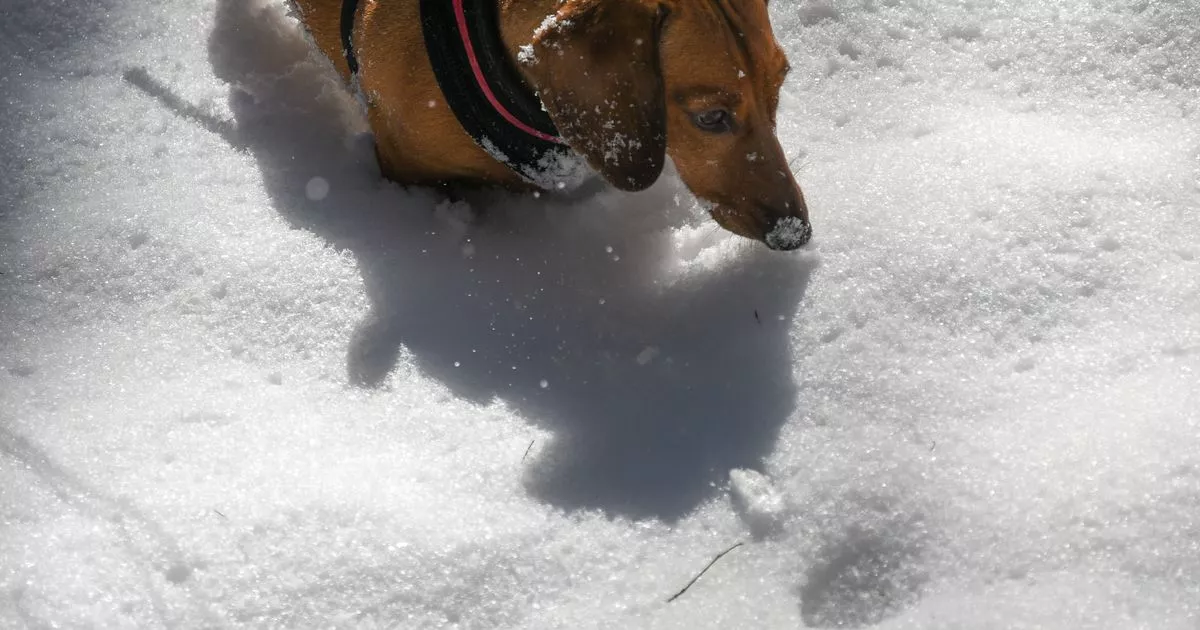
People have been told to check before they leave the house or risk a visit to the vets
Dog owners have been cautioned about a risk they may face this week. Alerting pet owners to the issue, people have been advised to think before leaving the house.
It comes as the Met Office issued a weather warning for parts of the UK for snow and ice, with temperatures falling below zero in many areas. But with the cold weather now here, people are being reminded that everyday walks can pose hidden risks to their pets.
Ross Hallifax, pet insurance specialist Purely Pets, has highlighted the risk of serious illnesses dogs face now temperatures are dropping. “Many owners assume that because dogs have fur, they’re naturally protected from the cold, but that’s not true.

You may want to keep your dog inside(Image: Getty)
“Just like us, dogs can suffer from hypothermia and even chemical burns from winter road salt and grit.” In fact, prolonged exposure to cold, especially in wet or windy conditions, is a primary cause of hypothermia in dogs.
Wet and windy conditions can also increase risk as water and wind accelerate heat loss, making a dog’s fur less insulating. Additionally, prolonged exposure to cold water can also cause hypothermia by rapidly lowering a dog’s body temperature.
Addressing the issue of how cold is too cold to walk your dog, experts from Bella+Duke say that whilst there’s no “one-size-fits-all answer”, it depends on several factors.
It suggests: “When the temperature is between 10C-7C, some dog breeds will need to wear a coat or jacket for their walks. Around 5C or less, some dogs are susceptible to developing frostbite and hyperthermia.”
Calling some temperatures “dangerous”, dog owners should be aware of the temperature and the risks they may carry. You can see the table here.
Ross continued: “A dog’s fur can only protect them from so much cold weather, and they can get hypothermia if they become too cold and can’t warm up.”
Owners should watch out for:
shiveringpalenesslow energybad coordination
You should seek urgent veterinary advice if you suspect your dog is in distress. Ross also encourages owners to avoid walking their pets at the coldest times.
He notes: “If you can, avoid going out at the coldest times of the day and try head out towards midday, when temperatures are likely to have risen slightly.”
While some dogs have thick fur to protect them, small, short-haired and older dogs lose heat quickly and require extra care and attention in colder temperatures. For example, “smaller dog breeds, like Chihuahuas, Miniature Dachshunds, or Jack Russell Terriers, have less body fat than bigger breeds, so they get cold quickly.”
“Keeping your dog well exercised is just as necessary in the winter months as it is in summer”, Ross concludes. “For breeds less suited to cold weather, such as whippets, greyhounds, and Yorkshire terriers, consider a weatherproof, fleece-lined coat to keep them warm. Limit their time outdoors in the cold to prevent discomfort and health risks.”
