


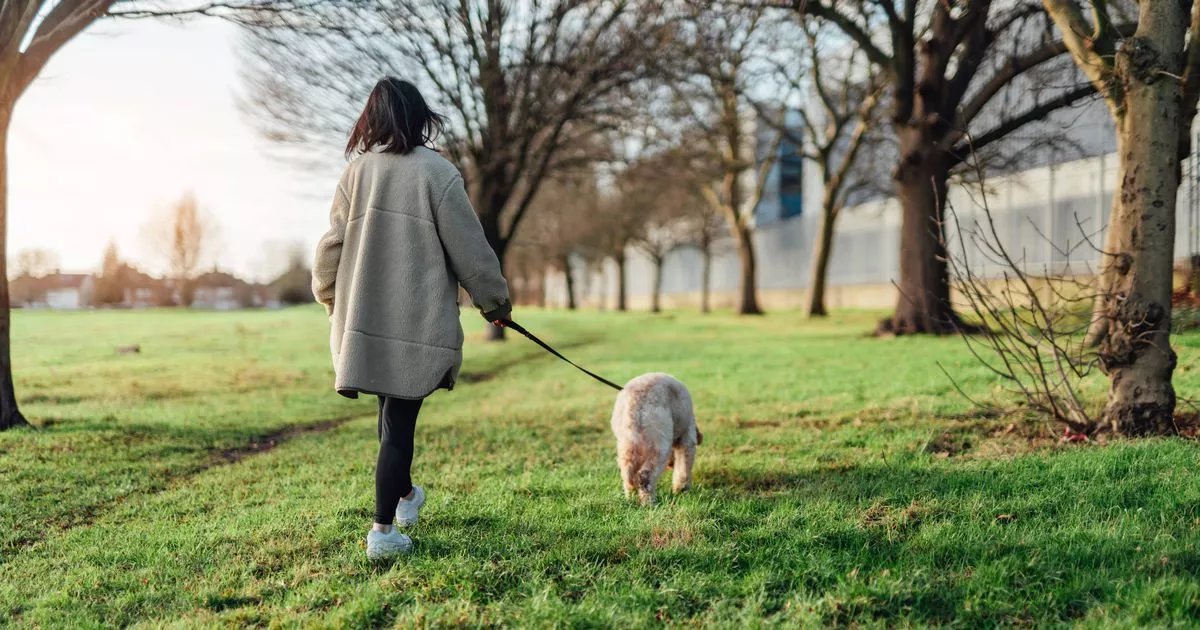
A dog owner asked on Reddit what it means when their pet turns to look at them while walking. The heartwarming answer shows it’s called ‘checking in’ and demonstrates something heartwarming
Deciphering what’s going through your dog’s mind isn’t always straightforward. Whilst a wagging tail clearly signals contentment, and snarling with bared teeth unmistakably indicates aggression, our four-legged companions possess numerous other methods of expressing their emotions that can prove trickier to understand.
One dog owner turned to Reddit seeking clarification about a behaviour their pet frequently displays during outings. The response left everyone astonished. In the post headlined, ‘What does it mean when a dog turns its head and look at me while walking?’. they explained: “I have always wondered the meaning of head turning. I let her lead and sniff most of time when walking. I give her confirmation when she looks at me then she keeps going. What is she trying to tell me?”
Responders unanimously agreed on one point – this represents precisely what a properly trained dog ought to do during walks. One user commented: “That is what people train for weeks to develop. It’s called a check in.
“Keep praising it when you see it. She’s just checking to make sure you’re still with her and perhaps to tell you she’s having fun. Or maybe she saw something and wanted to know if you did too.”
Another contributor noted: “Checking in. This is a good sign that she’s engaged with you and looking to you for cues.”
In response, someone else added: “Exactly that. It’s like a quick ‘we good?’ glance. Shows trust and connection, not anxiety. Pretty solid walking relationship.”
Another person commented: “Dogs are social/pack animals and we’ve spent thousands of years carefully selecting them for cooperative partnership with humans. What you’re seeing is handler focus/engagement and is one of the core tenants of dog training/handling that we strive for.
“Some dogs have it more naturally than others, and it can be cultivated/diminished based on their experiences. Continue to mark and reward these check-ins with praise and/or treats and you’ll have a strong foundation for training/obedience.”
A further user added: “She’s checking in on you! I’ve been working for several months on this exact thing. I praise her and give her a treat every time she looks at me. This keeps her attention on me and not bunnies and squirrels.”
Canine behaviour specialists confirm that training a dog to check in is a crucial element of their development. It reinforces obedience whilst maintaining their attention on you rather than possible distractions.
How to teach a dog to check in
Animal experts at Pupford explain: “Teaching your dog to check in does require patience and persistence, and is not something you can expect to happen in a single training session. But if you’re willing to put in the time and effort, you can successfully teach your dog – especially with the right tactics.
Get a leash, a harness or collar, a clicker, high-value treats, and a treat pouchReward eye contact: Take your dog for a walk in a calm, controlled environment. You can do this stage in your home. Without prompting, reward them every time they look at you.Practice consistently: Practice this enough so your dog begins to look at you hoping for a reward. Pair the treat with a clicker sound or a word like “yes” that you can use to eventually phase out treats.Add distraction: Add distractions like other people, animals, or cars passing by. Keep rewarding your dog when they look at you.Change the environment: Once the dog is very good at this, try it out in other environments.
“The goal is to have your dog initiate looking up at you from time to time without any prompting from you, in any situation,” the experts advised. “If you encourage your dog to check in with you frequently, you’ll start to notice it becoming a habit.
“Further encouraging check-ins to take place whenever a situation changes (you walk in a new area, another dog comes along, there’s a new toy in the room, etc.) helps your dog understand that they should check in with you whenever something changes. Eventually, they’ll be able to use that skill to better understand their environment and navigate situations.”
