


This post was updated Jan. 16 at 10:12 p.m.
Animals – whether personal pets or service animals – can be seen around campus.
While UCLA’s residential pet policy only allows fish in tanks under 10 gallons, the school’s accommodation services allow students with disabilities to live with service and emotional support animals. These accommodations allow Bruins to reap the mental and physical benefits of pets.
Jennifer Dobkin is the manager of UCLA People-Animal Connection, a program that provides animal-assisted therapy for patients at UCLA medical facilities such as the Santa Monica Medical Center.
According to Dobkin, therapy and service animals are trained to fulfill different roles. Therapy animals are tested and trained to be comfortable with people who are not their owners and provide a de-stressing presence. On the other hand, service animals are trained to provide emotional and physical support to their owner and no one else.
According to the American Kennel Club, service animals substitute for tasks that individuals with disabilities cannot perform on their own. Some examples include guiding people with blindness, responding to sounds for deaf people and fetching items for individuals with disabilities. In contrast, therapy dogs work in community settings to provide comfort and affection for many individuals, according to the same source.
Many training organizations require therapy and service dogs to pass the Canine Good Citizen exam, a skill test assessing dogs’ manners and responsible dog ownership. After passing, organizations administer behavioral training to address certain disabilities or situations to provide accredited certification.
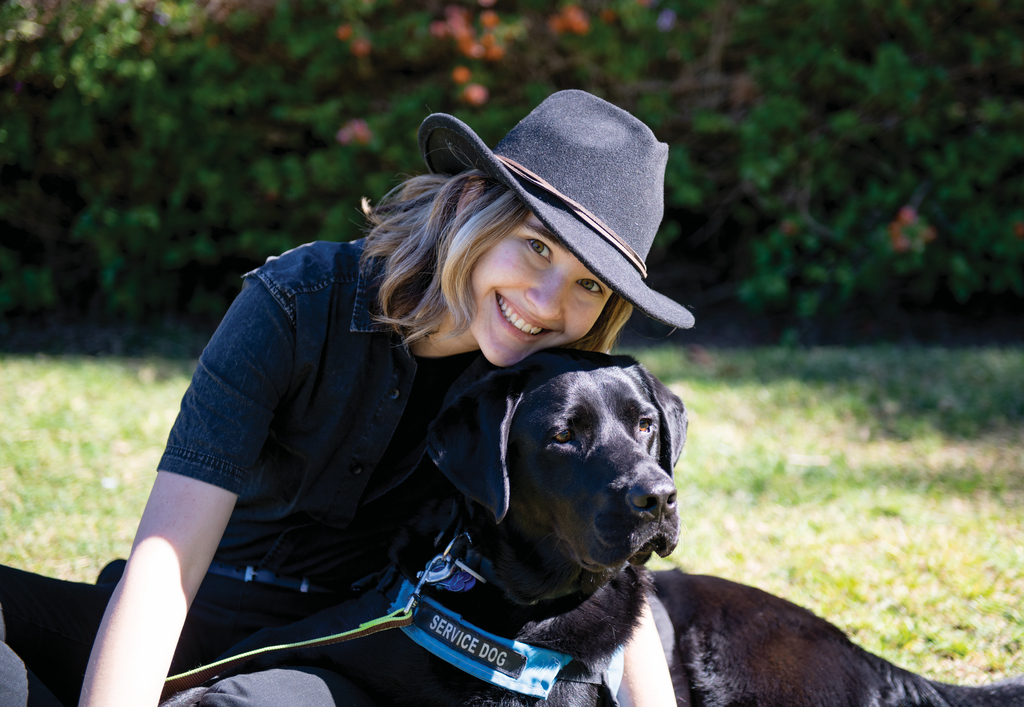
Bruins can register for their service and emotional support animals to live on campus through the Center for Accessible Education. Spencer Scruggs, director of the CAE, said in an emailed statement that students must submit an accommodation request form and address requests for additional information before the CAE can make a decision. The full accommodation process can be found on the CAE’s website.
Scruggs added that students also have the option to appeal if their accommodation is denied and that the process usually takes two to four weeks.
Maya Siegel, a fourth-year education and social transformation student, said despite the initial challenge of getting in touch with the CAE, the registration process was rather smooth once it started.
Siegel added that since being on campus with her dog Yogi, she has found a community of other students who raise, train and own service animals.
“It (having a service dog) has made networking and connecting with people a lot easier because people immediately want to show me pictures of their dog and talk about their dog,” Siegel said. “On top of that, I also discovered the club Collar Scholars, which I’m now heavily involved with.”
Collar Scholars, a student-led service dog training organization, helps educate the broader UCLA community about the role of service dogs. The organization has a committee that works on disability laws and partners with disability justice organizations on campus to ensure university policies properly advocate for service animals.
In addition to accommodations, UCLA Policy 135 establishes behavior expectations of service animals, emotional support animals, pets and therapy animals on university property. For example, the policy requires all owners to have dogs on leashes under 6 feet long to ensure complete control of and responsibility for their pets at all times.
Despite the current processes and measures in place addressing service animals, Siegel said she has been frustrated with the lack of support the university offers for students with disabilities through the Disabled Student Union at UCLA and the CAE. For example, she added that the CAE took seven weeks to get back to her after she submitted her initial accommodation application and did not provide any support in the interim.
“They (students) have no one to reach out to to ask questions about what it’s actually like having service animals on this campus,” Siegel said.
Various campus groups are working to address these gaps and advocate for service animals on campus.
For example, the Student Wellness Commission at UCLA works to enhance students’ overall sense of belonging on campus by facilitating students’ access to pet therapy.
Chiara Frank, a fourth-year neuroscience student and the current USAC student wellness commissioner, said the commission plans to forge connections with more organizations that host animal-centered therapy events this school year.
“We try to bring animals … with people who are trained, so that can be a de-stressing measure for students,” Frank said.
Therapy animals can improve students’ physical and psychological well-being, according to the International Journal of Environmental Research and Public Health. Students who spent time interacting with therapy animals reported feeling less stressed than those who did not spend time with the therapy animals, according to the same source. Dobkin added that therapy animals can lower an individual’s blood pressure, which may help with stress management and overall health.
UCLA isn’t alone in welcoming therapy animals to campus. An EdWeek article reported that K-12 schools nationwide are bringing animals into classrooms in response to the growing youth mental health crisis and positive outcomes of the practice. In fact, Colorado, Michigan, Oklahoma and Virginia have actively invested state education funds to support therapy dog training, according to the same source.
As some students lean on animals to manage and improve their well-being, various campus groups such as PAC said they plan on continuing to ensure all students feel supported.
“We hope to grow the program bigger so that we can provide more campus support,” Dobkin said.
