


Dogs are found almost everywhere people live, yet many breeds remain unfamiliar even to devoted dog lovers. More than 200 recognized breeds exist worldwide, and many others have been developed in isolated regions with very small populations. Some of these dogs rarely appear outside their native areas, though each one reflects the culture and landscape it came from.
New Guinea Singing Dog
Credit: Wikimedia Commons
The New Guinea Singing Dog lives in the remote highlands of New Guinea and remains one of the most unusual canines in the world. It earned its name from its haunting vocalizations, which sound closer to musical tones than typical barking. These medium-sized dogs share ancestry with dingoes and developed independently in the mountainous terrain of Papua New Guinea.
Catalburun

Credit: Facebok
Turkey’s Catalburun stands out immediately because of its unusual split nose. The two nostrils appear separated, giving the dog a forked snout unlike any other breed. Hunters in southern Turkey prized this pointer for tracking game birds with remarkable accuracy. Only a few hundred are believed to exist today.
Telomian

Credit: Reddit
The Telomian developed among the Orang Asli communities of Malaysia. Villagers built homes on tall stilts to stay safe from snakes and flooding. Dogs needed to be able to climb to follow their owners indoors. Over time, the Telomian evolved flexible paws that grip ladder rungs with surprising ease. Outside Malaysia, the breed remains scarce.
Norwegian Lundehund

Credit: Wikimedia Commons
Life along Norway’s steep coastal cliffs called for a dog that could handle tight, risky terrain. Fishermen relied on this breed to climb into narrow ledges and bring back puffins without slipping. Over time, it developed six toes on each foot and joints flexible enough to squeeze through spaces most dogs couldn’t manage. The breed nearly disappeared during World War II, when its numbers dropped sharply.
Azawakh

Credit: Wikimedia Commons
The first thing you notice about the Azawakh is how lean it looks, almost like it was built for speed alone. That’s not far from the truth. This dog comes from the Sahara, where nomadic Tuareg communities relied on it to chase down fast prey like gazelle across open, unforgiving terrain. Long legs, a light frame, and serious endurance make it perfectly suited for that kind of work. Outside that region, it stayed largely unknown until fairly recently.
Lagotto Romagnolo

Credit: Wikimedia Commons
The Lagotto Romagnolo’s soft, curly coat makes it look like a companion dog, but it started out working in Italy’s marshes, retrieving waterfowl. When those wetlands disappeared, the breed adapted. Its strong sense of smell made it one of the best truffle-hunting dogs.
Otterhound

Credit: Youtube
Few breeds carry such a strong link to medieval hunting traditions as the Otterhound of England. Packs once tracked river otters that threatened local fish stocks. The dogs developed webbed feet and a thick waterproof coat suited for swimming long distances. Hunting bans in the late twentieth century removed the breed’s original purpose.
Mudi

Credit: Wikimedia Commons
Hungary’s Mudi remains one of Europe’s lesser-known herding dogs. Farmers valued the breed for its intelligence and quick reactions around stubborn livestock. The Mudi likely formed naturally during the nineteenth century through crossings between local herding dogs and spitz-type breeds. Enthusiasts in Hungary and Finland now maintain small but stable populations.
Stabyhoun

Credit: Wikimedia Commons
The Stabyhoun comes from the Dutch province of Friesland, where it developed as a reliable all-around farm dog. Farmers valued it for handling different tasks, from retrieving game to guarding property and keeping rodents in check around barns. The breed stayed mostly within the region for generations, and that limited spread kept its population relatively small even today.
Peruvian Inca Orchid

Credit: Wikimedia Commons
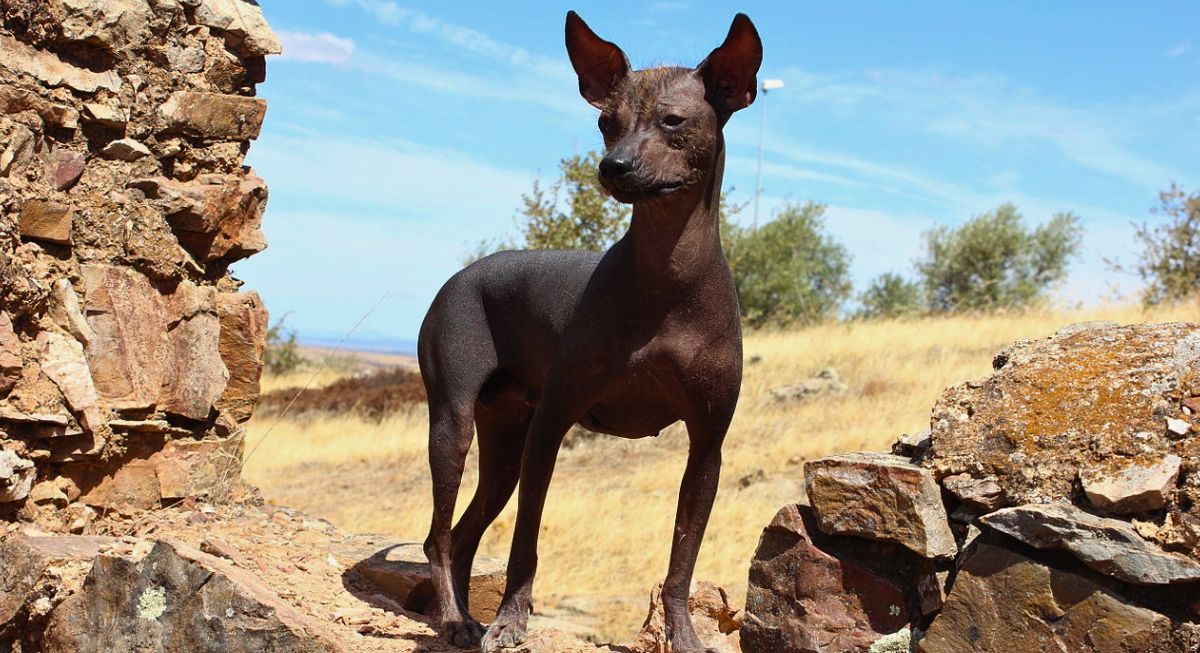
The Peruvian Inca Orchid often surprises people at first glance because many of these dogs have little to no fur. This breed has been around for over a thousand years, appearing in ancient Peruvian pottery long before modern times. Early civilizations kept them as both hunters and companions. Today, they still exist in three sizes, from small to large, and remain closely tied to Peru’s cultural history.
