


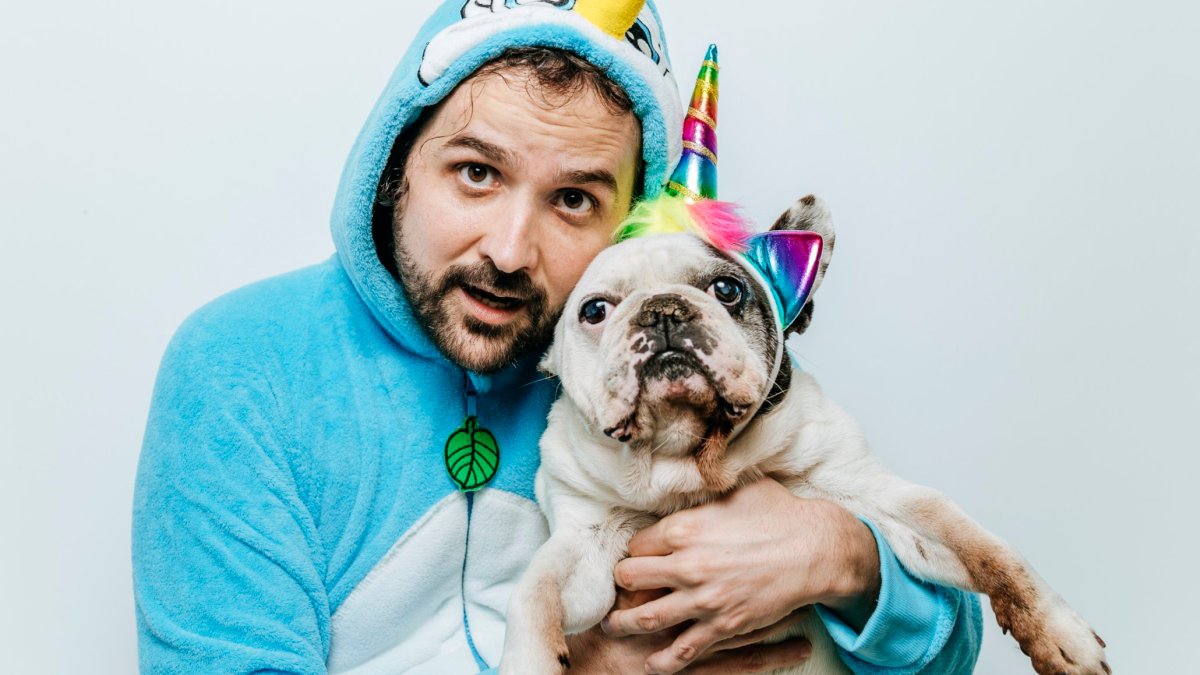
Facing freezing 7am weather to walk the dog. Scooping stinky “gifts” from the cat-litter tray. Bracing for extortionate vet bills. You’d think having a pet was the ultimate sign of selflessness. And yet, from parading them like fashion accessories to using them as instruments of control and domination, some people’s reasons for having a pet are more narcissistic than altruistic.
Narcissism exists on a spectrum and we all sit on it somewhere. At the healthy end is the self-love that helps us survive and thrive. At the other, there’s people with narcissistic personality disorder – those who have no empathy for humans nor animals.
In these extreme cases, it’s easy to spot a narcissistic pet owner. They’ll likely lose interest in their furry friend once the novelty wears off. Or maybe they won’t bother to meet the animal’s basic needs. Worse still, they could abuse the pet, using it as a receptacle for their anger at a world that doesn’t see them as perfect.
New Feature
In Short
Quick Stories. Same trusted journalism.
But what about the more nuanced, messy middle? We asked Dr Katherine Compitus is director of the veterinary social work post-master’s at NYU Silver School of Social Work – who has given this subject much thought through her Psychology Today blog, Zooeyia. Here are her seven signs to watch out for.
Dog owners are likely culprits
Of all the conventional pets, a dog is probably the most time-consuming. So why on earth would a self-centred narcissist go K9? Counterintuitively, Dr Compitus has observed that narcissists are more drawn to dogs because they give great optics. Dog owners can wear their pet like an empathy badge – a handy smokescreen for someone lacking in empathy.
“Dog people can take their pets out and show other people what a great guardian they are. And because we’ve developed a symbiotic relationship with dogs for over 40,000 years, dogs are dependent on humans and will display unconditional love. This is a great narcissistic supply, a way to constantly reassure and feed the ego, making them feel like the best person in the whole world,” she says.
Watch out for pets as status symbols
A classic sign of narcissistic pet ownership is buying a designer breed to carry around like a Céline handbag. Looking at you, Ms Paris Hilton.
Dr Compitus says it’s not only yappy little teacup dogs like Chihuahuas that signal this trait: “It depends on the culture. If somebody wants to look tough, they might get a rottweiler to reinforce their masculine image. But if someone wants to look pretty, they might go for something cute and fluffy. They’ll go for anything that will get them attention, including portable exotic pets like snakes or iguanas.”
Beware overloaded dating profiles
We instinctively believe dog owners are empathetic. Seeing a man cuddling a pet makes the soft-hearted amongst us go gooey. It’s why many men’s dating profiles are peppered with photos of them skipping through meadows with their dog. Or their friend’s dog. (We’ll have to gloss over the injustice of women and their felines being dismissed as crazy cat ladies.)
But Dr Compitus cautions: “Although it may look like they’re taking great care of someone, you have to question why. It may be less about genuine empathy and more about wanting to be seen as being the best pet owner in the world.”
There could be more to those matching outfits
Pearl collars, tutus, bejewelled hair clips – these naff items are enough to humiliate a human, let alone a pet. Yet it’s not uncommon for a narcissist to treat their pets like dolls. Worse still, dress them up in matching outfits to extend their personal brand.
Dr Compitus, who works in Manhattan – the fur-shion OG – illustrates how narcissists put their own desires ahead of their pet’s needs by citing a case of one client refusing to ditch the too-tight Louis Vuitton collar he’d bought for his French bulldog. Likewise, desperately trying to turn Fido into the next K9 Kardashian through incessant social posting can be a sign of prioritising your vanity over your pet’s sanity.

‘Vet jumping’ isn’t an act of heroism
Arguably, the hardest part of having a pet is knowing when to say goodbye. According to Dr Compitus, the narcissistic pet owner will resist euthanasia, regardless of how much the animal is suffering. “They’re so dependent on the pet to meet their needs, they can’t bring themselves to let it go.”
Should a vet insist the dreaded time has come, the narcissist – who, of course, always knows better than medical professionals – will seek out alternative advice in a phenomenon known as “vet jumping”. They are also less likely to get their pets spayed or neutered. “They see the animals as a reflection of themselves and they themselves don’t want to be neutered. But it’s also because they may like the attention that comes from breeding their pet.”
Overspending doesn’t count as generosity
You’d think that giving a pet the best food, the best grooming, the best bed is a sign of self-sacrificial devotion. Not necessarily.
“Narcissists want people to believe they’re great,” says Dr Compitus. “So they want to be seen to give their pet the most expensive things. But they’re really only thinking about their own indulgence, not the pet’s.” Surely no dog would ever, given the choice, choose a heavy gold-plated collar over a soft leather one.
Blind to a pet’s bad behaviour? A red flag
A narcissist’s pet will always be well-groomed and perfectly trained. Or at least, that’s what they’ll think. Because the narcissist always knows best, they won’t need puppy-training classes. Their pet will be perfectly trained by their own hand (a hand that hopefully won’t train through smacking).
So when that perfect dog barks at others in the park, it will most definitely be the other dog’s fault. “It’s like,” says Dr Compitus, “you take your dog into someone’s house and it pees on the rug, and they say, ‘Well that rug shouldn’t be there.’”
Many people will be guilty of one or two of these signs. After all, who doesn’t want to give their pet the best food? I know I do. But so long as the pet’s needs come before your own entertainment and ego, you’ll be at the healthy end of the narcissistic spectrum, and not what Dr Compitus calls “the asshole” end.
