


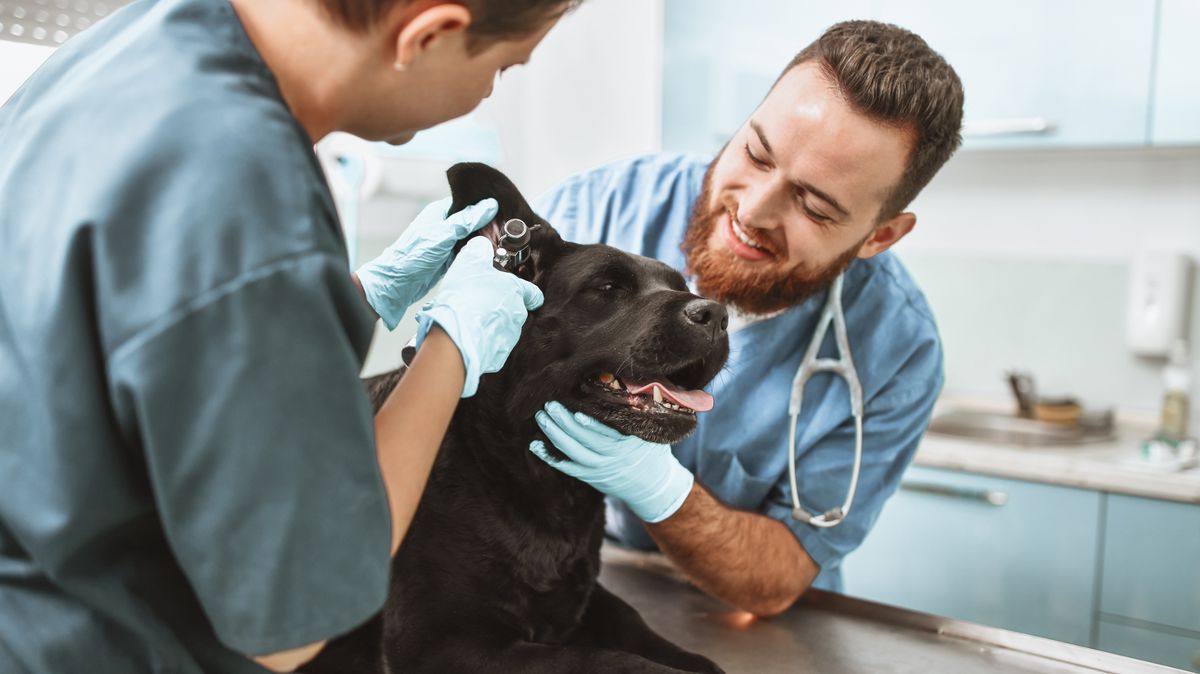
A vet has explained how acting quickly can make the difference between life and death when it comes to one condition, most often seen in larger dogs such as Great Danes
When our beloved pets are feeling under the weather, it can be hard to figure out what’s wrong. They can’t tell us how they’re feeling, so it’s up to us to figure out whether it’s just a little grumble, or something more serious.
Now one vet has explained how acting quickly can literally make the difference between life and death when it comes to one condition seen in dogs. Amir Anwary has more than 951,000 followers on TikTok, where he regularly shares advice and tips about keeping your beloved pets are fit and healthy as possible. He recently shared a dire warning for dog owners.
As the clip began, a caption was displayed on the screen, stating: “This video is two minutes long and watching it may save your dog’s life. (You need to know this).”
Amir said: “Today I wanted to talk to you guys about a really really deadly condition called GDV, or bloat, in dogs. It is an extremely deadly condition, and the difference between life and death with this condition is you as an owner being able to recognise the symptoms as soon as possible and bringing your dog into the vet clinic as soon as possible.”
What is GDV, or bloat?
GDV stands for Gastric Dilation and Volvulus. Amir said: “GDV, or bloat, in dogs is essentially when your dog’s stomach fills up with either food, gas, or liquid, and it gets so full that it actually twists in on itself.
“When it twists on itself the entrance closes so gas can’t escape any more and blood supply to the spleen and to the stomach gets blocked off, which means that the dog can go into shock very, very quickly. And because the entrances are both blocked off, the stomach gets bigger and bigger faster and faster, meaning it progresses very quickly.”
He continued that large, deep-chested dogs such as Great Danes and German Shepherds are most susceptible to the condition, although any breed can be affected. “Generally what happens and what I see most is dogs are fed a big meal,” he said.
“Either a lot of pellets or they are given bread or something starchy, and this produces gas. The dogs are taken out to exercise within that one hour period after eating and, because their stomachs bloat and get that much bigger, and because the exercise can cause a lot of movement, the stomach can twist in on itself, and that’s essentially the beginning of the GDV.”
Explaining the symptoms of the condition, Amir continued: “The most common signs you will see after this happens is you may see their stomach starts to get bloat, they become restless, they become very uncomfortable, they can’t just be still, and they’re often trying to vomit. So they’re trying to get something out but nothing is coming out.
“You’ll often also notice that they start drooling a lot. If you notice a combination of these symptoms, especially in the close vicinity of you having fed them, then you need to be very, very wary that this could in fact be GDV.
“So if you ever notice a combination of these symptoms, make sure that you call your vet immediately, because with these symptoms, every single hour is truly a matter of life and death.”
According to pet charity the PDSA, an operation is usually required to treat a dog with GDV, although the condition can be fatal even with treatment. Approximately 15 per cent of dogs don’t survive despite treatment.
How can bloat, or GDV, be prevented?
The PDSA provided these tips for reducing the risk of your dog developing the condition:
Restrict exercise for one hour before and after feedingRestrict car travel for one hour before and after feedingFeed several small meals a day instead of one large mealFeed them from the floor. Although vets had previously advised to use raised bowls, studies have since shown this can actually increase the risk of the conditionEncourage your dog to drink little and often instead of large amounts in one go (but never withhold water)If your dog eats very quickly, consider using a slow feeding bowl, or give them small amounts more often. If you have more than one dog, separate them during meal times to stop them racing to finish their food
Ensure our latest headlines always appear at the top of your Google Search by making us a Preferred Source. Click here to activate or add us as your Preferred Source in your Google search settings.
