


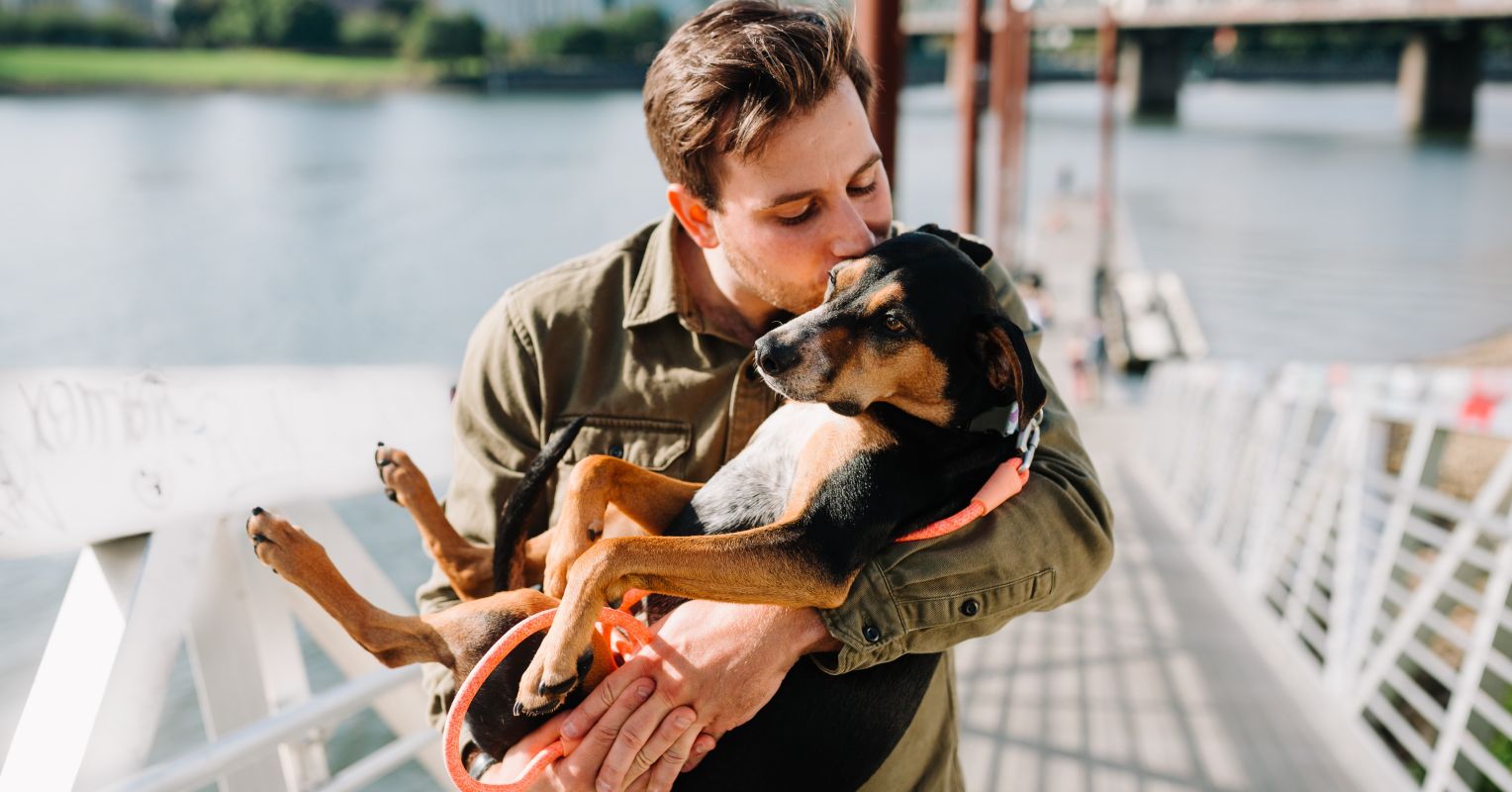
I had the honor of speaking with Dr. Chris Blazina about his most recent book, One Unwavering Friend: Heartwarming Tales of Men and Dogs. His book is a fascinating compendium of historical tales, from Odysseus to Freud to Dickens and Darwin, as he describes the deep and lasting bond that often forms between men and their dogs.
Chris Blazina, Ph.D. is a licensed psychologist and retired professor. He currently practices in the Albuquerque, New Mexico, area. His work focuses on the bond between men and their canine companions in research, historical context, and clinical practice. This is his eighth book.
Why did you write One Unwavering Friend?
CB: It seemed like a natural extension of the work I have been doing concerning the special bond between men and their dogs. Embedded within the title is a specific meaning—the hardwiring we have to seek meaningful relational connections throughout our lifetimes, even among those who may have found success in their professional lie as many of the men in the book had. Having one unwavering friend is a psychoanalytic rule of thumb that has heavily influenced my practice as a psychologist. We need one steady connection throughout our life. Sometimes it comes in the form of a canine companion.
The collection of 20 stories concerning thinkers, healers, artists, and underdogs from the past two hundred years or so, all point to the same direction—trying to understand the special place dogs occupied in these men’s life. For instance, Charles Dickens, Charles Darwin, Napoleon, and Freud all have compelling backstories. Ones where dogs occupied a special place and meaning. My task in the book was to uncover as much as I could regarding their life and place the meaning of the human-animal bond squarely in it. Depending upon the source material, we can see some very interesting things. Darwin wrote his book about human and animal emotions with his dog Polly in her basket next to his writing desk. She has a cameo in Darwin’s book, her likeness illustrating dog emotions. This came at a time in Darwin’s life when his theory of evolution was gaining some acceptance and, at a personal level, when some of his early trauma from the loss of his mother seemed to abate. What better way for someone like Darwin to approach uncomfortable emotions than from an intellectual position, with his dog literally by his side.
Dickens also had a special bond with dogs, especially in his turbulent middle age. As his marriage crumbled, walks with his dogs were especially important to him. Dogs become a source of inspiration. He kept little statues of them on his writing desk and carried them in his coat pocket. Dog themes also appear in his writing. Characters could be summed up by the way they treated animals. Dickens even made reference to his own sense of being a stray.
Freud had a cumulative experience of grief and loss in his personal life. He confided to a colleague that he was unable to love anymore. His dogs seem to help feel that void. He lost his beloved daughter and grandson to the Influenza pandemic. He had to leave Vienna at the onset of World War II, and he dealt with more than 30 cancer operations on his jaw. His chow dogs played many roles, including masticating his meat before Freud ate. One, Joffie, also had her own couch in his consolation room. Freud relied on her to screen would-be patients and to let him know when time was up.
How does your book relate to your background and general areas of interest?
CB: It builds upon the work I have been doing for some time, just from a different perspective—in this case, a series of psychobiographies regarding the men found in the book. I have specialized in working with male clients all my career. That also began to include the psychology of man’s best friend after my own dog, Kelsey, passed away early in my career. As a part of my own grief, I needed to understand why the bond was so important for me. That curiosity spread to my male clients who told tearful stories of what their dogs meant to hem: men who would not otherwise allow themselves to shed a tear in other areas of their lives and those who knew their animal companions carried a special meaning even if their lives felt full and meaningful. I found it interesting that many of the men in the book followed a similar thread—a type of special connection and vulnerability concerning their dogs.
Who is your intended audience?
Anyone interested in a knowing about the special bond dogs play in our life. The stories vary in length depending upon available source material. I thought about them as a series of daily meditations on the meaning of this bond.
What are some of the topics you weave into your book, and what are some of your major messages?
The need for connection is especially present both in good and bad times. The special niche dogs can occupy psychologically for us, in many cases, involves a type of emotional constant we come to rely upon. The stories seem to add credibility to how many of us feel today regarding our animal companions. Working dogs take on a different type of work these days regarding our affiliation needs. The stories in the book suggest this is not a new occurrence, but one we learn more about in both historical and psychological contexts.
While I didn’t set out to do this, most of the stories also concern men of a certain age. Given I am at middle age (and beyond), it was those types of stories that drew me in—maybe for companionship’s sake and maybe for a type of guidance to see how their lives turned out. In my prior research it has been interesting to see how important dogs are to middle-aged men in contemporary times, when the research supports the notion of shrinking social networks as males age. Many men turn to their dogs as a type of companionship and emotional comfort. I believe the meaning of the bond is much more nuanced than just a perceived unconditional acceptance or love. I think of Darwin’s notion of “difference of degree and not kind” when looking across the commonalities of mammalian species. That includes dogs and what they offer us in our daily communion. Research continues to point out their own unique ways of experiencing the world, but it is important to not overlook the commonalities we share—like a need to attach. Building upon that is the experience of having dogs be in sync with our emotional life through good and bad times. Our experience of this in-sync behavior is a form of empathy that is like the healing and generative experiences emphasized in contemporary psychoanalysis. We feel seen and heard, in this case without the use of words. It is empathy in action.
How does your book differ from others that are concerned with some of the same general topics?
Writing psychobiographies about well-known men and their dogs seems to be a new approach. But it fits into the work colleagues have done trying to understand the psychological importance animal companions have in our lives. The book adds another layer to that search. Placing dogs into the context of the ups and downs of others’ lives makes the meanings more tangible. Something we can think about and compare to our own lives now.
Is there anything else you’d like to tell readers?
Another reason for writing the book had to with the onset of the pandemic. If we had to keep social distance from those outside our immediate circle, then certainly we must find other ways to fulfill those relational needs that are inherent to our very existence. Sometimes the need to connect can be a met in the context of hearing other’s stories. It creates a type of community even if those stories concern people long gone. I know, for me, some of the men in the book started to feel like friends of a sort as I researched and understood more about their lives and how their dogs fit in.
