


Laura Hobgood reveals how the relationship between dogs and humans has been marked by both love and exploitation
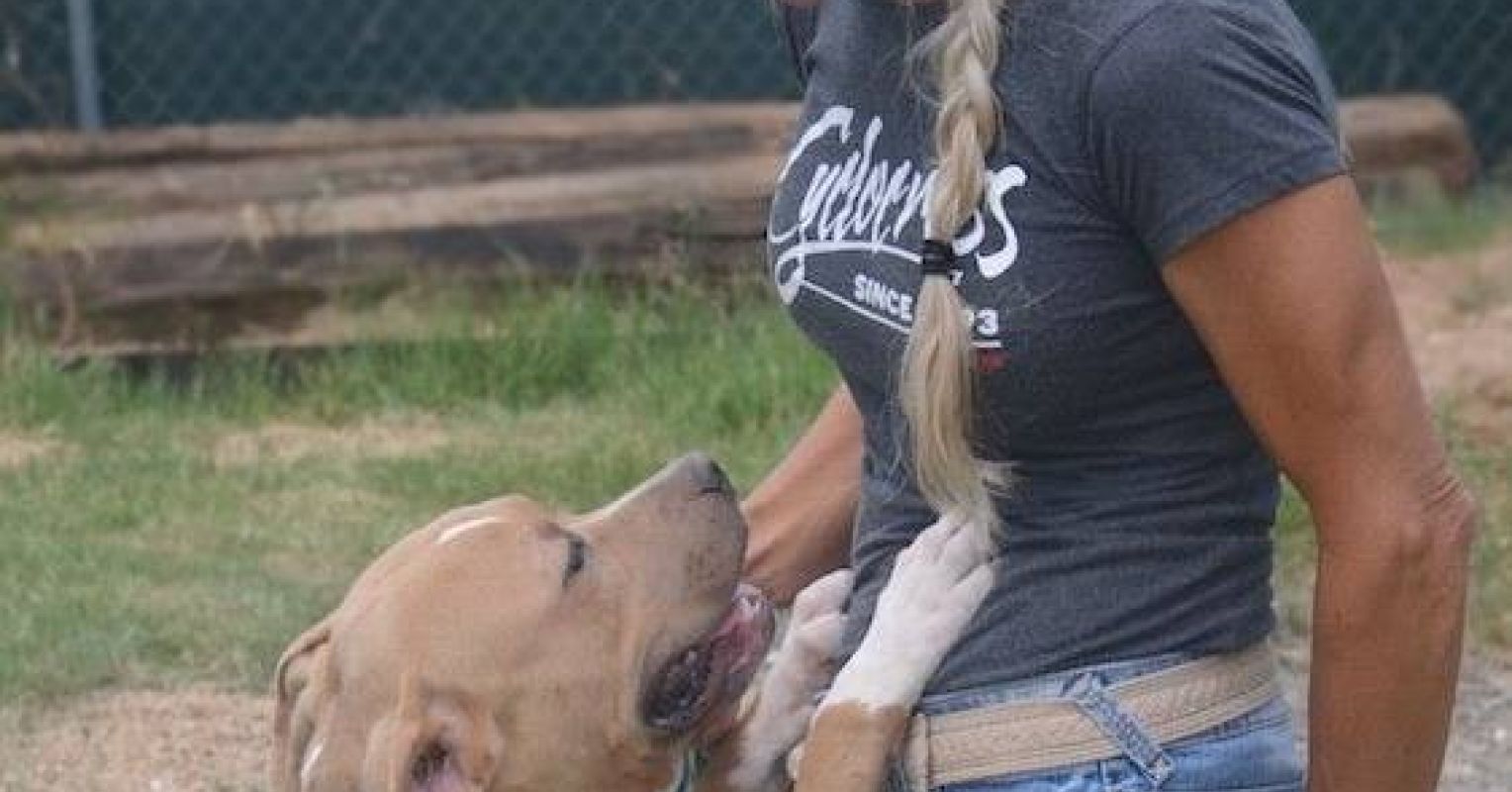
Southwestern University’s Dr. Laura Hobgood is a true champion for dogs. Not only is she a leading canine scholar, but she also tirelessly works directly with dogs in need. I’ve known about her excellent book A Dog’s History of the World: Canines and the Domestication of Humans for some time, and when it was recently issued in paperback, I reread it and wanted to know more about her remarkable wide-ranging and historical work. Each time I went through it the pages were increasingly marked up with notes, so I asked Dr. Hobgood if she could answer a few questions. Gladly, she said “yes,” and our interview went as follows.1
Why did you write A Dog’s History of the World?
For most of my academic career my research (and teaching) focus has been on animals and religion, particularly from an ecofeminist, justice perspective. My outside of work activism, in part, is connected with dog rescue. When your worlds collide, they collide in fruitful ways sometimes! I was lucky enough to have my dog rescue world and my religious-history academic world meet each other. So I wrote two books on animals in the history of the Christian tradition, each of which had a chapter focused on dogs. Then I decided that it was time to write a book on this amazing history of dogs, with a dog’s and religion twist. I was also lucky enough to be able to teach a class on dogs with an amazing colleague in kinesiology, Dr. Jimmy Smith. I learned so much from team-teaching with him that I was able to incorporate a bit more of borderline science ideas as well. I could not have written this book without his insights. That collaboration speaks volumes to true interdisciplinarity and the teacher-scholar model of education.
Source: Courtesy of Laura Hobgood
Your book is stunningly wide-ranging and a most stimulating read. What are some of your major messages in this eclectic and transdisciplinary work?
The main message that I hope readers get is that humans did not do anything on our own. As Donna Haraway said in her book The Companion Species Manifesto: “I tell a tale of molecular differences, but one less rooted in Mitochondrial Eve in a neocolonial ‘Out of Africa’ and more rooted in those first mitochondrial bitches who got in the way of man making himself yet again into The Greatest Story Ever Told.” Dogs remind us, day in and day out, that we didn’t do this on our own. We have had partners in crime for both our brilliance and our destructiveness.

Source: Courtesy of Laura Hobgood
What are some important points for readers to understand about dogs, death, and religion?
They die and we die. In that, they are our frequent (too frequent) companions. Somehow humans have noticed that for a long time. I think it might be that we had to grieve them so much more frequently—every 10-15 years or so—and we didn’t want to let go, just as we don’t want to let go of the humans in our lives who die. Maybe, since we hoped for an afterlife, we also hoped dogs would be there. So we spoke them into our afterlife stories. And later wrote them into those same stories. It’s sad, to me, that some religions started to remove other animals from their stories. Christianity eventually did this (that’s the tradition in which I specialize), and I think in a way that weakened it. Medieval saints are imaged with and associated with animals —St. Roch and a dog, St. Jerome and a lion, St. Clare and a cat, St. Anthony and a pig—and more. It’s an anomaly in human history, from what I can see, that animals are dissociated from our “religious” or “sacred” worlds.
How does a religious perspective add to conversations about the origin of dogs, how they have evolved as they interacted with humans and dog-human relationships? You have a section called “Canine Religious?,” write a good deal about what I would call “co-domestication,” and the subtitle for your book is Canines and the Domestication of Humans.
Yes, so the subtitle is from the press! And I don’t disagree with its suggestions. Definitions of “what is religion” are debated and they evolve. The functioning definition for my work at this point is “what matters”—what decides what I’m doing today. Dogs decide what many humans are doing every day. The 2010 Census in the U. S. revealed that more households had dogs than had children at home, with an aging population and fewer humans having children—but dogs matter. And for some people, they are life-changing. I don’t claim necessarily that “dogs are ‘religion'”—but thinking about other animals as being important, and being as important as humans, changes our “religion.”
Does your perspective offer new light on “designer dogs” and what you call “the Frankenstein syndrome?”
So this is just an area that makes me a bit frustrated since I am involved with dog rescue. Humans have so constructed some dogs to “look” a certain way that we’ve destroyed their genetics (OK, I’m not a scientist!). Some little breeds with big eyes (think Maltese, chihuahua), look crazy cute with those big eyes, but those eyes are big because we’ve bred them not to have a deep enough socket to hold in the eye! So the eyes can-might-do pop out, which is awful. We’ve turned some dogs into our speciality monsters just for appearance sake.
“So cycling and dogs are religion—they are what matters.”
What are some of your current and future projects?
My current projects are focused on cycling as religion. It is connected to dogs and religion! If “what matters” is here, on this earth and now, then why would religion be focused on what you have to do to get to an afterlife? What matters is here and now. Even the major religious traditions have a huge focus on this (justice, peace, feed people and other animals). My official training is in the history of the Christian tradition. From what I can tell, Jesus loved dogs (and would have loved bikes). On a bike you move slowly enough through the world to see other animals. You have to know where the wind is. You feel the sun. You climb up and down—so you move on the earth and know it. Since I started riding, I know the land and the animals so much more intimately than I did before I was riding. So cycling and dogs are religion—they are what matters.
Many thanks, Laura, for a most stimulating and thought-provoking interview. As an avid cyclist, I couldn’t agree more with you about the value of getting and pedaling here and there for hours on end. I hope your book continues to enjoy a broad global audience because our relationship with dogs crosses cultures and as you write, “cycling and dogs are religion—they are what matters.”
Note:
1For more information on how dogs became dogs, please see essays and books by Psychology Today writer, Mark Derr, and an interview with Ray Pierotti and Brandy Fogg about their recent book called The First Domestication: How Wolves and Humans Coevolved.
