


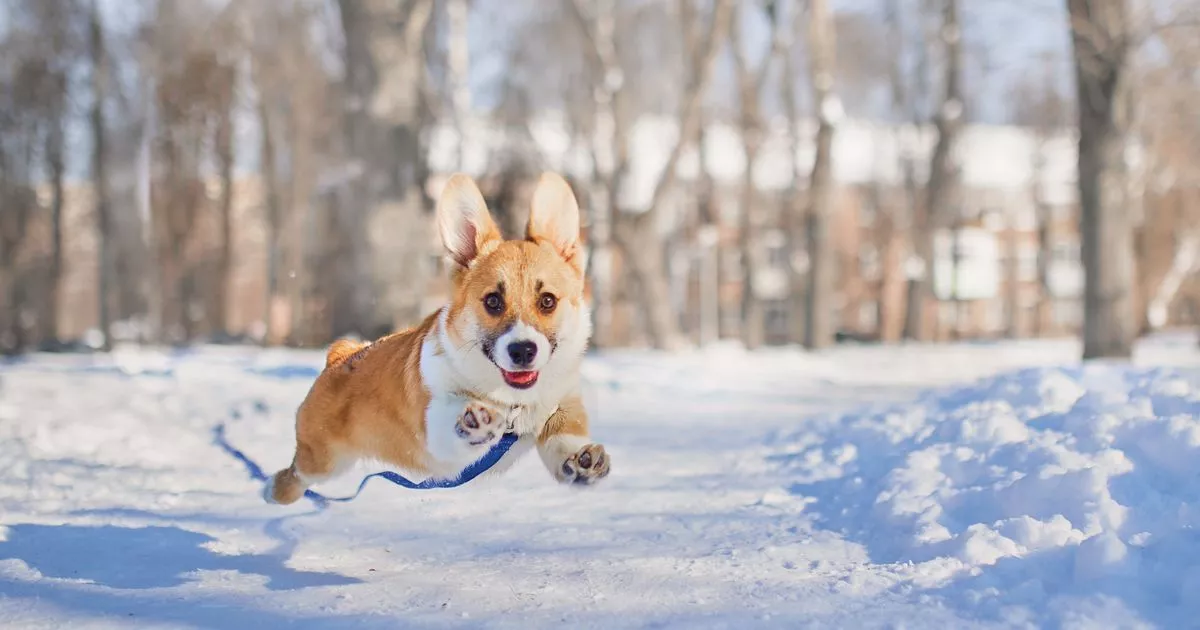
While owners may think they are helping their furry friend, it could be causing them distress.
The current cold snap isn’t showing much sign of letting up just yet. Amber and yellow weather warnings for snow and ice cover all of Scotland for at least part of today, January 6, and the Met Office has issued extended alerts for Wednesday, January 7.
While the wild winter weather is wreaking havoc across roads and rails, life goes on for the vast majority of us. That means many of us will have to get wrapped up and brave the elements to get on with things.
For dog owners, that means getting your furry friend out for some crucial exercise, despite the tough conditions. Wrapping them up in a coat can give them an extra layer of protection – but one item should be avoided as it can “cause distress”.
A top vet has warned people against putting winter boots on their pooches. Research has shown that searches for ‘do dogs need snow boots?’ rose by 600 per cent last winter, and Dr Anna Foreman, the in-house vet for Everypaw Pet Insurance, has stepped in to offer her expert opinion.
She said: “As long as owners wash and dry their dog’s paws thoroughly after a walk, there is no real need for outdoor boots. These boots are prone to causing a dog distress (dogs are not used to wearing shoes like we are), are easily lost, and are unnecessary in most cases.”
Dogs have in-built footwear, Dr Anna says, so extra boots aren’t needed. The expert said: “Dogs’ feet have shoes already on them in the form of their pads. These hard, leathery ‘soles’ prevent injury to the softer skin surrounding and delicate structures underneath.

“They can be cut or penetrated with sharp objects, and so if a dog becomes suddenly lame, their pads should be checked thoroughly as well as the rest of their leg.”
There are some occasions, however, where boots should be considered. Dr Anna said: “If a dog is slipping in the wet, ice or snow, their pads are becoming chapped and sore, or the skin of their feet (or the dogs themselves!) are not tolerating being washed, boots can be considered.”
Something Dr Anna does champion during winter weather is a raincoat for dogs “who do not have an innately waterproof coat”. She added: “The easiest way to find out is by exposing your dog to the rain (or a shower at home!) and then feeling under their fur to the skin underneath.

“If their deeper fur and skin is dry and warm, their outer hair coat is keeping them dry. If the deeper fur and skin is wet or cold then this means an external waterproof coat may be more appropriate to keep them dry.”
Shivering doesn’t necessarily mean dogs are cold, but it’s important to check their fur. Dr Anna said: “Remember any dog has the potential to get wet and cold if they are completely submerged, if rain is particularly heavy or an animal is exposed to it for an extended length of time.
“If unsure, check the deeper layers and skin of your dog after a walk. If a dog is seen shivering on a walk, this is a definitive sign they are cold. Remember dogs can also shake if anxious, and so shivering may not always be due to the cold.”

Warning about the colder winter temperatures, however, Dr Anna said: “Care should be taken in frosty and cold weather so that a dog does not get cold. Extremely cold lakes can quickly plunge a dog into becoming sodden and cold very quickly.
“Waterproof clothing can also quickly weigh a dog down in the water. Care should be taken not to encourage play in such areas unless a dog has an innately waterproof and warm hair coat.
“Care should be taken not to allow a dog onto a frozen lake – their weight can quickly cause the ice to break and an extremely dangerous situation develop, both for the dog and their owner trying to save them.”
And she warned: “Grit on the pavements can irritate dogs paws, mainly between the pads. In some situations it can lead to dermatitis and (more extremely) chemical burns.”
Keep your dog safe on winter walks
Make sure your dog is not too cold or too hot while walking. Some dogs have innately warm and waterproof coats, so extra layers can cause them to become uncomfortable and overheatKeep your pet visible in darker conditions with a hi-vis collar, harness, lead, or coat. This means they are less likely to be lost and other people, including car drivers, can see them betterOpt for lead-only walks if the weather is particularly poor, for example in high winds or thick fogsWash your dog’s feet when you get home, particularly if you have been walking on a gritted pavement. Dry their feet thoroughly too as moist feet can lead to skin diseaseAvoid frozen water
