


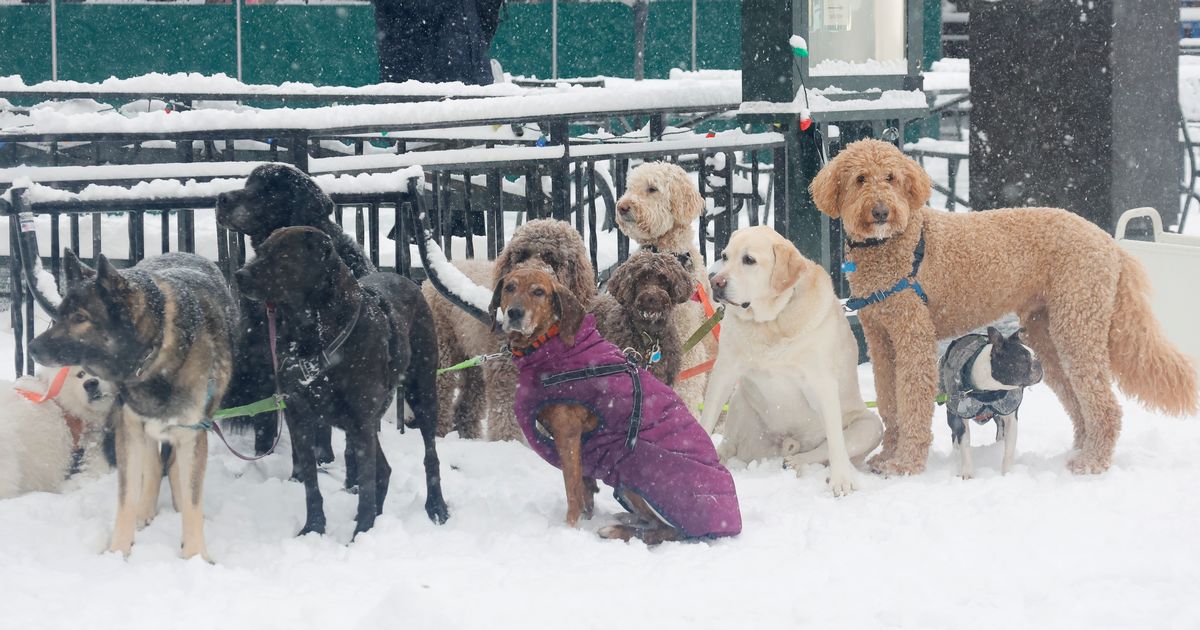
Dog owners are being told to rethink their walking routines as temperatures plummet and snow covers the ground amid the Met Office’s amber and yellow weather warnings. However, it isn’t only these harsh and icy conditions that pets need to steer clear from, as the rest of January can also lead to our beloved pooches becoming ill.
A vet has issued an urgent warning for pet owners to “limit walks” at the beginning of the new year in order to keep their four-legged pals safe and healthy. It is crucial that owners know when it is too cold to walk their dogs as we get through the rest of the chilly winter months.
For those who are concerned about the freezing weather front hitting Scotland, pet sitting platform TrustedHousesitters has shared some essential guidance on winter dog walking safety. This has been released in collaboration with veterinary surgeon Dr Rebecca MacMillan.
READ MORE: {{title}}
MacMillan said: “Most of us take sensible actions over the winter to look after ourselves, but we also need to think about how to keep our pets safe. The chilly weather can be enjoyed safely with our furry companions as long as you take a few simple precautions.”
The vet states that it is crucial to know the threshold of your canine companion, as this can vary between breeds. For example, research shows that medium to large dogs can usually handle 30 minute walks in temperatures above -6C, reports the Express.
Meanwhile, pet owners should limit walks to between 15 to 20 minutes for smaller breeds when temperatures drop below 0C.
Additionally, breeds such as Dachshunds, Pugs, and Yorkshire Terriers will need extra protection when walking in frosty conditions. This can come in the form of waterproof jackets, booties or jumpers. However, thick-coated breeds such as Huskies and German Shepherds will be fine in colder conditions as their fur provides extra insulation.
Pet owners are also advised to plan their walks strategically. This means planning walks during the warmest times of the day, which typically sit between 11am and 2pm. Another tip is to take shorter and more frequent walks rather than a long walk with more exposure to the cold conditions.
Another way to make sure you are making the most of your walks this winter is to have a dedicated space by your door that has all of your winter walking essentials.
This can include a high-visibility lead for darker nights, a paw balm to help protect against salt and grit, and a towel for drying any wet fur straight after the walk. However, the most important essential is to have a cosy space for your pooch to relax in that is away from drafts.
The guidance also warns owners with at-risk dogs to take extra precautions during the winter. In severe weather, it is important to limit outdoor time to quick toilet breaks for senior dogs and puppies.
Additionally, if your dog has health conditions such as arthritis, it may be better to look into indoor exercises as this can worsen in the cold.
The guidelines have also identified symptoms of cold stress. Pet owners need to act immediately if they notice any of the below signs:
Shaking or shivering – don’t assume this is normal winter behaviour
Walking stiffly or lifting paws off the ground – this could indicate painful ice or salt between paw pads
Hunched posture with tucked tail – a sign your dog is trying to preserve body heat
Whining or barking unnecessarily – your dog may be trying to communicate discomfort
