


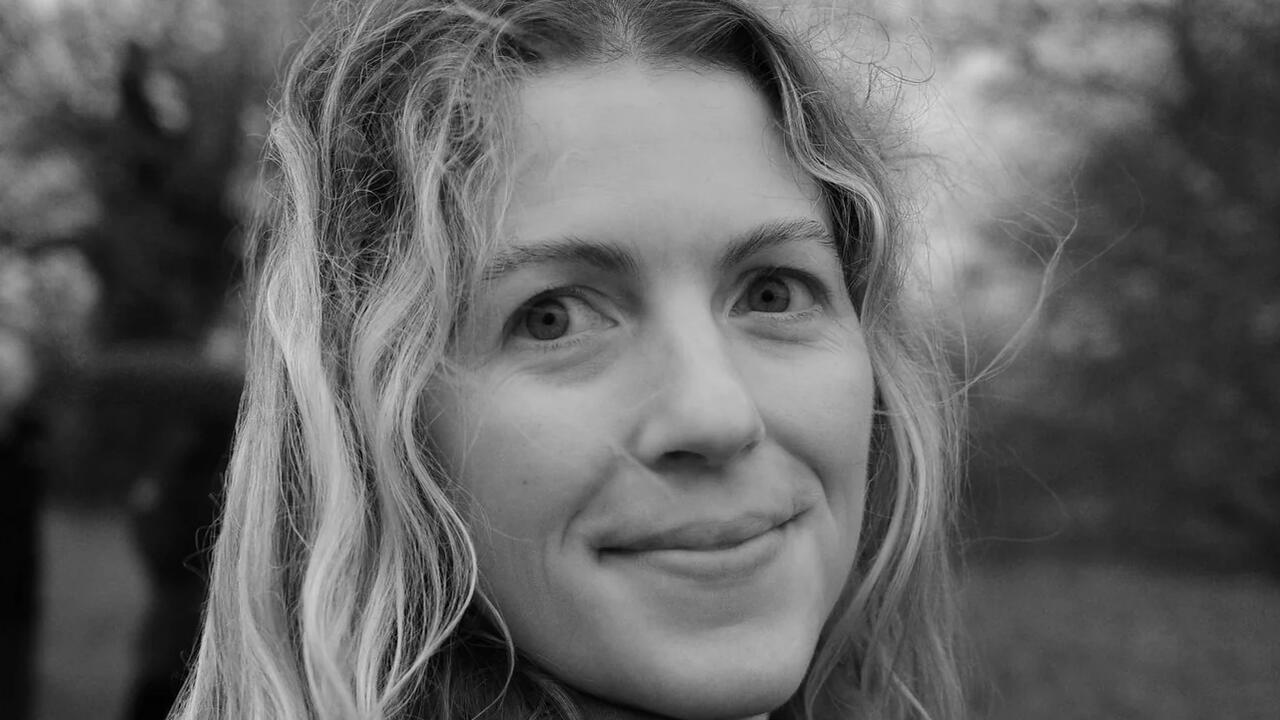
Emily LaBarge has a good story. The writer’s dream, one might think. Good stories – the more horrifying the better – are high currency in a cynical publishing landscape that capitalizes on traumatic experiences and their corollary ‘healing journeys’. By this logic, having a good story fall into one’s lap – or even wreck one’s life – renders half the work complete: no need to scrape around for material, develop an unusual interest or notable style, or perform the trick of forging something from nothing. Dog Days (2025) – the experimental memoir and anticipated first book by Canadian art and literary critic LaBarge – artfully skewers this myth, along with the alleged catharses of trauma narratives writ large. It presents its author’s good story not so much as a narrative to be told and consumed, but as a kind of antimatter which repels and shapeshifts in response to all attempts to contain it. Embracing disorientation as a formal strategy, Dog Days locates a sympathy between traumatic experience and the practice of writing itself: ‘The problem is time. The problem is voice. The problem is sequence. The problem is most definitely structure and, most ineffably, form.’
Still, the good story wants to be told. The book begins not in media res but with the incident’s re-enactment in a therapeutic context. ‘Pierre says I should lie in exactly the same position,’ LaBarge writes, ‘just like how it happened, for as long as it happened, and for as long as it takes until the pain comes out of me, otherwise it will never leave.’ The ‘it’ referred to took place in the author’s early 20s. During her family’s Christmas holiday on an unnamed island, their rented house was broken into by six masked men armed with guns, knives and machetes, and the family were held hostage for several hours. No one was harmed, but the incident, as Dog Days testifies, irrevocably shaped LaBarge’s life thereafter. The first third of the book employs different grammatical forms to tell and retell its happening. In one, it becomes a minimal, almost slapstick script with LaBarge as ‘Daughter 1’; another uses the second person to detail ‘The Schedule of Loss’ – the official title for a document given to an insurance company or court dealing with damage compensation; another disintegrates into illegibility altogether, as a series of ‘X’s stand in for verbs, nouns and adjectives until the reader can no longer follow its narrative thread.
Such stylistic splintering can be read both as a response to the reductive script the victim must perform in order to access judicial protection or validation, and as the dislocating effect of trauma itself: ‘I do not remember some things that happened in the first person, I only remember them in the second, third, omniscient, limited.’ Choices of syntax in the book’s first section are returned to in the third, in a discussion of linguistic frameworks that seek to analyse the speech patterns of trauma victims: ‘Every word, effectively, can be studied for pathological import.’ One of the book’s strengths, however, is its reluctance to self-pathologize. Different schools of psychoanalytic interpretation abound, alongside the work of trauma psychologists such as Bessel van der Kolk, author of The Body Keeps the Score (2014). Where a different book might tread water in the narcissism of small differences, Dog Days takes a hybrid approach that seems informed, at every level, by the author’s experience of dissociation and fragmentation. LaBarge writes from inside the space of so-called pathology, gleaning insights – as well as signs, superstitions, pareidolia, recurring numbers, images and tics – where she can.
‘In illness words seem to possess a mystic quality,’ wrote Virginia Woolf in ‘On Being Ill’ (1926): ‘We grasp what is beyond their surface meaning, gather instinctively this, that, and the other – a sound, a colour, here a stress, there a pause […] to evoke, when collected, a state of mind which neither words can express nor the reason explain.’ Dog Days similarly demonstrates that trauma entails its own mystical mode of reading, in which words and images become imbued with supra-rational connection and significance. LaBarge crafts this phenomenon into a distinctly compelling interpretative style, and these sections, on literature and cinema, are some of the most luminous in the book.
Of a passage in Woolf’s To the Lighthouse (1927), LaBarge writes: ‘This is a haunting syntax that, like the house, is perforated by absence and loss, stumbles and tries to recover, to carry on making sense as usual.’ This elegant insight could be a gloss on LaBarge’s own writing; indeed, later in the book, she admits that ‘looking back it seems as though everything I have written, ever, about any subject, is actually about the good story, at once a curse and a tidy exculpation.’
Dog Days is at times painfully attuned to this conundrum: that the good story lies behind all stories and may at any moment rear its head. Even as the book draws to a close, there is a sense that it is still undecided on how the good story should be told, if at all. ‘The nonfiction writer makes a Faustian bargain with the page,’ LaBarge writes, ‘which promises meaning if life is harvested for experience.’ That it never becomes clear if the page makes good on this pact seems in keeping with the book’s project – this is not, after all, a healing journey.
Instead, Dog Days stays with the difficulty, veering between ebullience, bewilderment and despair, dogged by its questions about how to make a life in the aftermath, and how to weather being shaped by forces beyond one’s control. LaBarge returns cyclically to language, and locates possibility within its generative ruptures: ‘She sits down at her desk to write, but, she sits down at her desk to write.’
Emily LaBarge’s Dog Days is published by Peninsula Press and available to purchase now
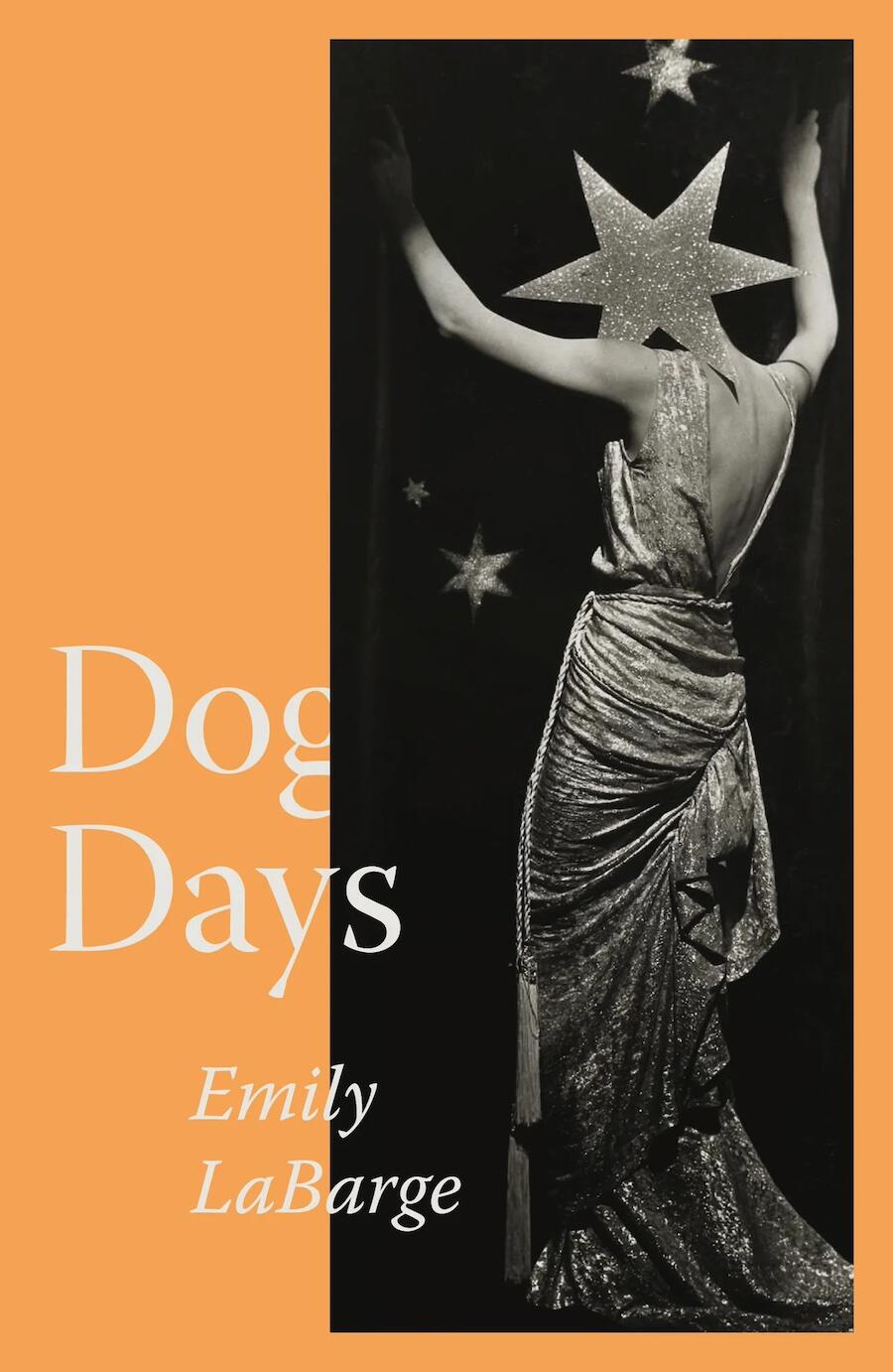
Main image: Emily LaBarge, Dog Days (detail), 2025, book cover. Courtesy: Peninsula Press
