


In recent decades, it’s become popular to crossbreed different dogs for maximum cuteness—but the originator of this trend had a different goal in mind. Back in 1989, Wally Conron wanted to create a pup that would meet the needs of a blind woman who required a guide dog, but whose husband was allergic to certain dog furs. The Labradoodle solved this problem by combining the temperament of the Labrador with the hypoallergenic coat of the poodle.
Although Conron came to regret his creation (designer crossbreeds sadly often prioritize a dog’s looks over their wellbeing), he wasn’t the first person to breed a pooch for a strangely specific reason. Here are eight examples of dogs that were bred for unique purposes.
Norwegian LundehundLöwchenTurnspit DogsJapanese ChinTibetan MastiffSalish Wool DogDalmatianNova Scotia Duck Tolling Retriever
Norwegian Lundehund
At first glance, the Norwegian Lundehund may look like a typical dog, but they have a few physical peculiarities that once enabled them to carry out the specialized job they were originally bred for: hunting puffins. Lundehunds come from the Norwegian island of Værøy, where eating puffin meat used to be a necessity. (The birds now have protected status.) Puffins roost in crevices in cliff faces, making them hard to reach, so Lundehunds were bred to scale the steep walls and retrieve them.
Lundehunds are the best climbers of the canine world thanks to their six functioning toes on each paw (rather than the usual four). They also have very flexible joints (they even can bend their head all the way back to touch their spine!), which allows them to maneuver their legs to fit through narrow passages in the rocks.
Löwchen

Anyone who’s shared a bed with a dog knows they can act like hot water bottles, and in Renaissance Europe that’s the exact purpose that löwchens often served. The little lapdogs were popular with royals and aristocrats and would have their fur clipped short on their hindquarters but left long everywhere else, giving them a distinctly leonine look. (Löwchen means “little lion” in German). Aside from looking adorable, the lion clip also aided their function as hot water bottles. The shaved section of the dog would better radiate heat under the covers, while their furry front attracted fleas and kept them from infesting the bed itself. Plus, their lion mane was the perfect fluffy hand-warmer for elite ladies during the day.
Turnspit Dogs

Another pup that was put to unique work during the Renaissance is the turnspit dog, which was used by wealthy people to cook meat. These canines ran in a wooden wheel that was fixed to the kitchen wall and would turn a spit of meat roasting over the fire. Turnspits were most similar to modern-day dachshunds and corgis, being small, long-bodied, and short-legged. In On the Origin of Species (1859), Charles Darwin points to turnspits as an example of selective breeding that was “not indeed to the animal’s or plant’s own good, but to man’s use or fancy.”
Sadly, turnspits were treated incredibly poorly because they were seen as kitchen tools rather than cuddly companions. The invention of mechanical turnspits—and, later on, ovens—made the dogs obsolete, and by the mid-19th century they were fast on their way to extinction. There’s only one (admittedly dead) turnspit left today: Whiskey, whose taxidermied body is on display at Abergavenny Museum in Wales.
Japanese Chin

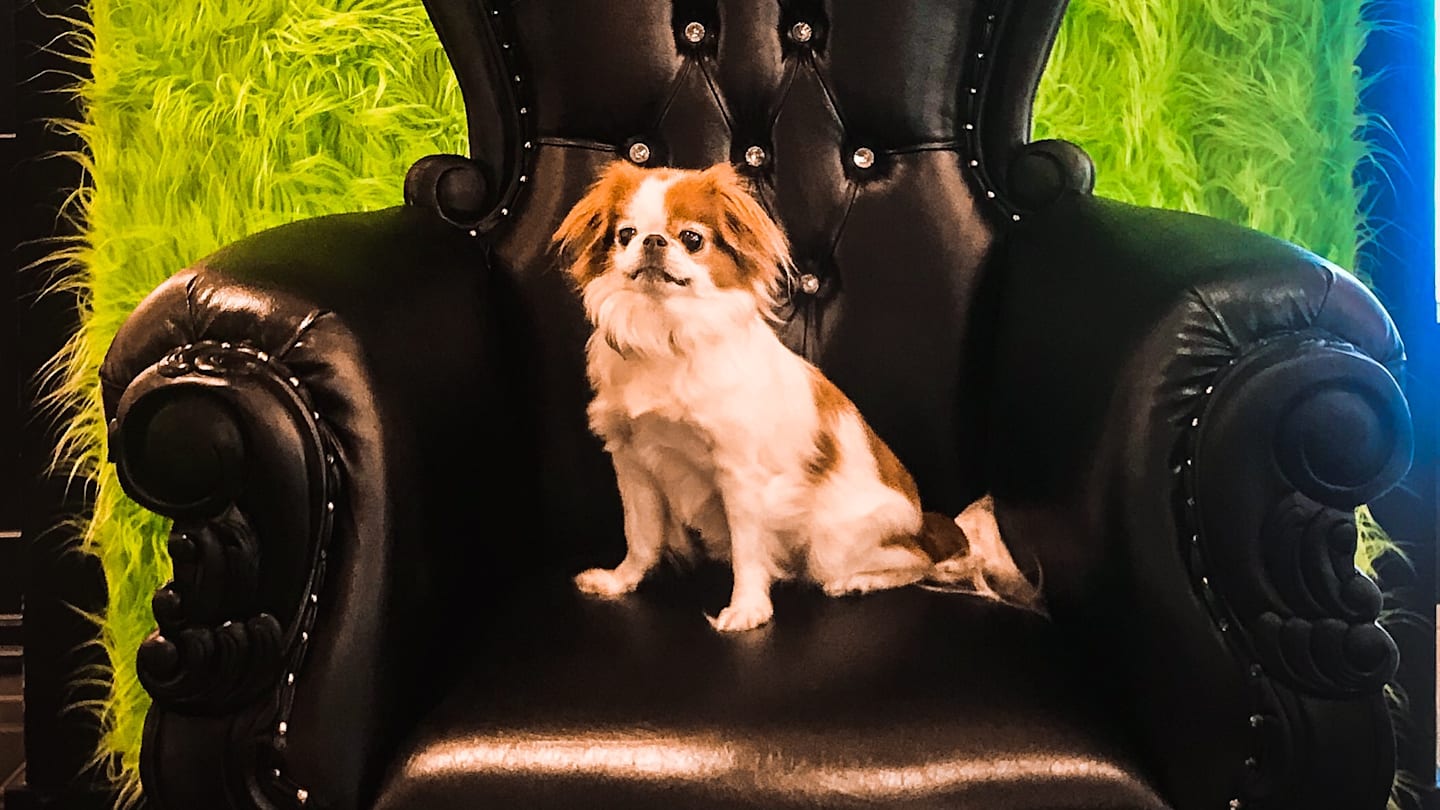
Despite having Japanese in their name, Japanese Chin likely originated in China (or possibly Korea). It’s believed they made their way to Japan as gifts given by Chinese Emperors to Japanese nobility, who took to the small, fluffy dogs and developed the breed into what it is today. The royal origins of the Chin led to them being treated like royalty; they were fed the best food and slept on silk pillows.
Royal women liked to carry the little lapdogs in the sleeves of their kimonos or in baskets, so they wanted them to be as small as possible—ideally, three pounds or less. In an effort to stunt their growth and achieve this weight goal, Chin puppies were sometimes made to drink sake.
Tibetan Mastiff

Tibetan Mastiffs are an ancient dog breed, and it’s thought that many modern, large working dogs can trace their roots back to the massive canine. Mastiffs have a long history of being used as guard dogs. Originally, they guarded Buddhist monasteries in Tibet. Tibetan Buddhists believed the dogs possessed the souls of deceased monks and nuns who couldn’t enter the mythical paradise of Shambhala. Aside from their spiritual significance, it’s no wonder Buddhists chose Mastiffs as their guard dogs; not only is their size intimidating (they can weigh up to 150 pounds), but they’re also protective of their owners and wary of strangers.
Salish Wool Dog

The Coast Salish peoples—whose territory once stretched from modern-day southern British Columbia down to northern Oregon—went to great effort to breed a dog with fur that could be woven like sheep wool. Called the Salish wool dog, this spitz breed was isolated on islets off the coast to ensure that other dog breeds didn’t dilute the bloodline. People would canoe over to the dogs to feed them a diet of salmon and herring.
The dog’s long, thick fur would be sheared and spun into yarn, which would then be woven with plant fibers and mountain goat hair to create blankets. Due to the enormous amount of work that went into producing the dog wool, the blankets were only made for special ceremonies or as lavish displays of wealth.
Sadly, the Salish wool dog went extinct by the end of the 19th century due to the efforts of colonists, who actively tried to stamp out Coast Salish culture. Just one pelt and a few blankets are known to have survived. However, there are hopes that the breed may be revived via the selective breeding of similar dogs.
Dalmatian

These days, Dalmatians are best-known for two things: Disney’s 101 Dalmatians (1961) and being firehouse dogs. The spotted canine’s association with fire trucks dates back to around the 1800s, when they were used as carriage dogs. Dals got on particularly well with horses (a bond that was strengthened by kenneling the dogs in the stables), so they were trained to run alongside horse-drawn carriages to clear the way and keep the horses calm. They would also guard the horses and coach when not in motion.
Firefighters were in particular need of carriage dogs—they acted as sirens on the way to the blaze, and then while the fire was being fought, they kept the horses nerves in check and ensured no one stole them. Although no longer used to this purpose, the breed standard height for Dalmatians is still under 24 inches, as that’s the maximum size that can fit under horse-drawn carriages.
Nova Scotia Duck Tolling Retriever

Ducks have a strange attraction to foxes, and duck hunters figured out a way of using this to their advantage. Bred in the 19th century in Nova Scotia, the red-coated and fluffy-tailed duck tolling retriever looks fairly fox-like and was trained to wander along the shoreline to attract ducks. Once the birds had been lured out (in Middle English tollen means “to lure” or “summon”) to scare the predator away from their young, the hunter would rise, scaring the birds into the air, and begin firing. The toller would then swim out to retrieve any shot ducks.
The only other dog breed used for this purpose that still exists today is the Nederlandse Kooikerhondje, which was trained by Dutch hunters to lure ducks into manmade duck-trapping ponds before the invention of gunpowder and fowling guns made shooting birds easier.
Read More About Dogs:
