

Close Menu
lechienrevue.com
    What's Hot

    8 Dogs Bred for Oddly Specific Purposes

    March 24, 2026

    Rare Dog Breed Has Fewer Than 10,000 Pups Left Worldwide and They Look Like Fluffy Pandas

    March 23, 2026

    8 Dog Breeds for Police Work and Military Jobs

    March 23, 2026

    Subscribe to Updates

    Get the latest creative news from FooBar about art, design and business.

    Facebook X (Twitter) Instagram
    Trending
    • 8 Dogs Bred for Oddly Specific Purposes
    • Rare Dog Breed Has Fewer Than 10,000 Pups Left Worldwide and They Look Like Fluffy Pandas
    • 8 Dog Breeds for Police Work and Military Jobs
    • The Dog Breed Known for Its Unique “Scream” Instead of a Bark
    • ‘We live in West Midlands town which is the UK’s dog capital – where people spend more on their pets than their kids’
    • Pet owners spend thousands a year to keep their furry family members happy and healthy, study finds
    • Top 40 largest dog breeds with photos
    • 7 Shy Dog Breeds That Make the Best Companions, Vets Say
    Tuesday, March 24
    X (Twitter) Instagram Pinterest YouTube TikTok
    lechienrevue.com
    Contact us
    • Unique breeds
    • Life style
    • Heritage
    • Stories
    • Wellness & Spa
    lechienrevue.com
    Home»Heritage»Modern domestic dog has a single geographic origin
    Heritage

    Modern domestic dog has a single geographic origin

    info@lechienrevue.comBy info@lechienrevue.comAugust 31, 2025No Comments4 Mins Read
    Facebook Twitter Pinterest LinkedIn Tumblr Email
    Share
    Facebook Twitter LinkedIn Pinterest Email

    By analyzing the DNA of two prehistoric dogs from Germany, an international research team led by Krishna R. Veeramah, Ph.D., of Stony Brook University in the USA has determined that their genomes were the probable ancestors of modern European dogs.

    The study also suggests that all contemporary dogs have a common origin and emerged through a single domestication process of wolves 20,000 to 40,000 years ago. Researchers at Johannes Gutenberg University Mainz (JGU) also participated in the study, the results of which recently have been published in Nature Communications.

    – Advertisement –

    Dogs were the first animals to be domesticated by humans. The oldest remains of dogs that can be clearly distinguished from those of wolves originate from what is now Germany and are about 15,000 years old. Unfortunately, the archaeological record is ambiguous, with claims of ancient domesticated dog bones from the most varied locations as far away as Siberia.

    Only last year were researchers able to sequence the genome of a 5,000-year-old dog from Ireland using the latest paleogenomic techniques. The results of the study led the research team at the University of Oxford to suggest dogs were domesticated not once but twice. In addition, the research team also hypothesized that an indigenous dog population domesticated in Europe was replaced by incoming migrants independently domesticated in East Asia during the Neolithic period.

    “Contrary to the results of this previous analysis, we found that our ancient dogs from the same time period were very similar to modern European dogs, including the majority of breed dogs people keep as pets,” explained Veeramah, Assistant Professor of Ecology and Evolution at Stony Brook University. “This suggests that there was no mass Neolithic replacement that occurred on the continent and that there was likely only a single domestication process for the dogs observed in the fossil record from the Stone Age and that we also see and live with today.”

    An archaeologist entering the Kirschbaumhöhle (Cherry Tree Cave) in the Franconian Alps, where the remains of the dog that lived 4,700 years ago during the Neolithic period were found. Researchers were able to sequence the animal’s complete genome. CREDIT photo/©: Timo Seregély, University of Bamberg

    In their article “Ancient European dog genomes reveal continuity since the Early Neolithic,” Veeramah and his colleagues used the older 7,000-year-old dog to narrow the timing of dog domestication to the 20,000 to 40,000 years ago range. They found evidence that the younger, 4,700-year-old dog represents a mixture of European dogs and a population that resembles current Central Asian/Indian dogs. This finding may reflect people migrating from the Asian steppe to Europe at the beginning of the Bronze Age, bringing their own dogs with them.

    – Advertisement –

    “Our study shows how the analysis of entire ancient genomes can help us to gradually understand complex processes, such as dog domestication. Only direct insights into the past like this enable us to disentangle the effects of the many parallel and successive events that are involved, including targeted breeding by humans as well as population movements and admixture of multiple populations,” added Dr. Amelie Scheu, one of the primary authors of the article and a research assistant in the Palaeogenetics Work Group at the Institute of Organismic and Molecular Evolutionary Biology at Johannes Gutenberg University Mainz.

    Overall, however, the question where exactly dogs were first domesticated in geographic terms remains a mystery, although Krishna R. Veeramah expects that the sequencing of additional ancient Eurasian genomes will help to eventually solve the issue.

    JOHANNES GUTENBERG UNIVERSITAET MAINZ

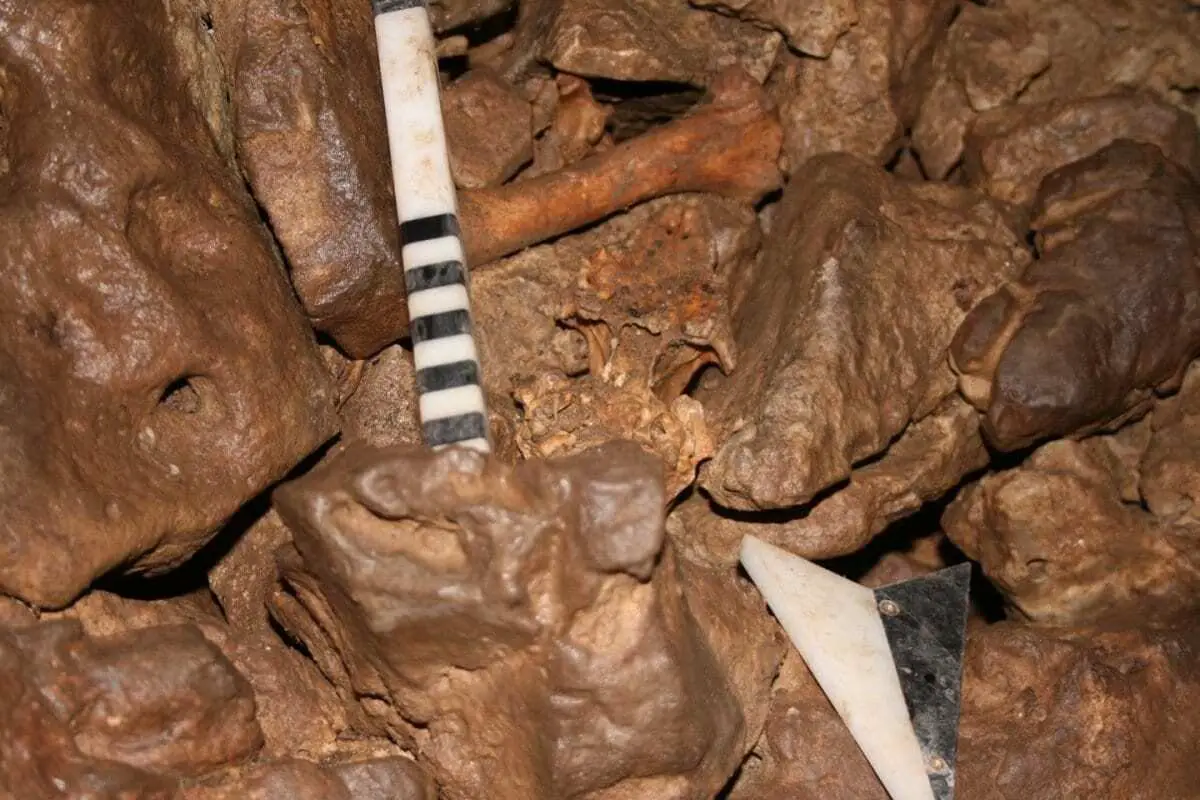
    Header Image – The skull of the 4,700-year-old Neolithic dog was found in the Kirschbaumhöhle (Cherry Tree Cave), here still in situ before whole genome sequencing. Credit : photo/©: Timo Seregély, University of Bamberg

    – Advertisement –

    dog domestic geographic modern Origin single
    Share. Facebook Twitter Pinterest LinkedIn Tumblr Email
    info@lechienrevue.com
    • Website

    Related Posts

    Rare Dog Breed Has Fewer Than 10,000 Pups Left Worldwide and They Look Like Fluffy Pandas

    March 23, 2026

    8 Dog Breeds for Police Work and Military Jobs

    March 23, 2026

    The Dog Breed Known for Its Unique “Scream” Instead of a Bark

    March 22, 2026
    Leave A Reply Cancel Reply

    Top Posts

    The Dog’s Life: A Legacy of Giants in the Mountains of Turkey

    July 21, 2025109 Views

    Black people’s complicated history with dogs

    August 3, 202519 Views

    🐾 The Big Picture: Dogs on the Move

    July 19, 202516 Views
    Stay In Touch
    • Facebook
    • YouTube
    • TikTok
    • WhatsApp
    • Twitter
    • Instagram

    Join Le Chien Revue

    Inspiration, stories, and canine lifestyle — straight to your inbox.

    About us

    Le Chien Revue is more than just a publication — it’s a celebration of the timeless bond between humans and their most loyal companions.
    Founded with a deep admiration for canine beauty, history, and culture, Le Chien Revue is a digital sanctuary for dog lovers who appreciate the finer details of breed heritage, the artistry of canine photography, and the lifestyle that comes with living alongside remarkable dogs.

    Our Picks

    8 Dogs Bred for Oddly Specific Purposes

    March 24, 2026

    Rare Dog Breed Has Fewer Than 10,000 Pups Left Worldwide and They Look Like Fluffy Pandas

    March 23, 2026

    8 Dog Breeds for Police Work and Military Jobs

    March 23, 2026

    Join Le Chien Revue

    Inspiration, stories, and canine lifestyle — straight to your inbox.

    lechienrevue.com
    X (Twitter) Instagram Pinterest YouTube TikTok
    • About Us
    • CONTACT US
    • Privacy Policy
    • Terms & Conditions
    • Disclaimer
    © 2026 Le Chien Revue. All Rights Reserved.

    Type above and press Enter to search. Press Esc to cancel.